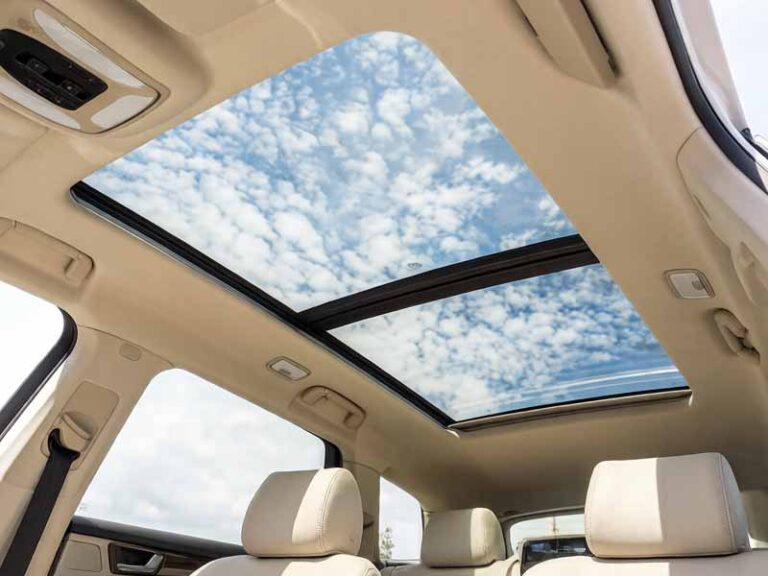
Panoramic Sunroof Glass Replacement | How to Choose the Right Automotive Aftermarket Car Sunroof Glass Supplier
With the continued growth of global car ownership, panoramic sunroofs are no longer a luxury feature, but rather standard equipment on many mid-range and even entry-level models. This has naturally driven strong demand for panoramic sunroof glass replacement in the aftermarket repair industry.
For wholesalers and repair chains engaged in the import and distribution of automotive glass, choosing the right supplier not only means obtaining products at competitive prices but also directly impacts installation success rates, warranty claims, and overall customer satisfaction.
With years of experience in automotive sunroof glass manufacturing, we have witnessed firsthand the significant differences between the aftermarket and original equipment manufacturer (OEM) production. OEMs focus on standardized assembly lines, while the aftermarket needs to address multiple vehicle generations/minor model differences/different damage conditions/long-distance transportation risks, etc.
Therefore, choosing the right supplier involves more than just price. Based on our experience, there are three key factors: compatibility, safety standards, and packaging strength.
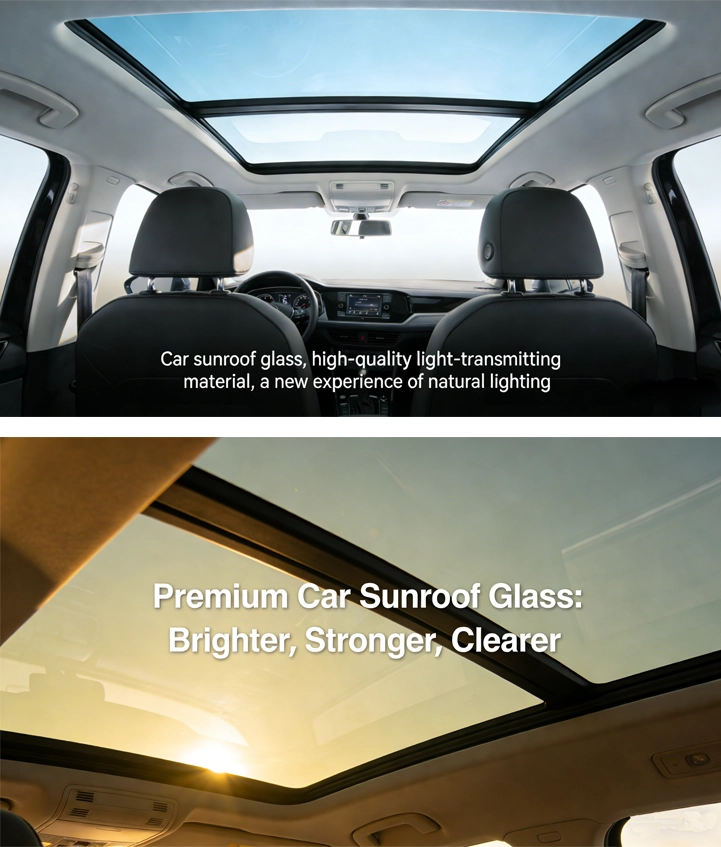
I. Compatibility – The Biggest Challenge in the Aftermarket
In aftermarket repairs, most problems do not stem from “inferior glass,” but from improper installation.
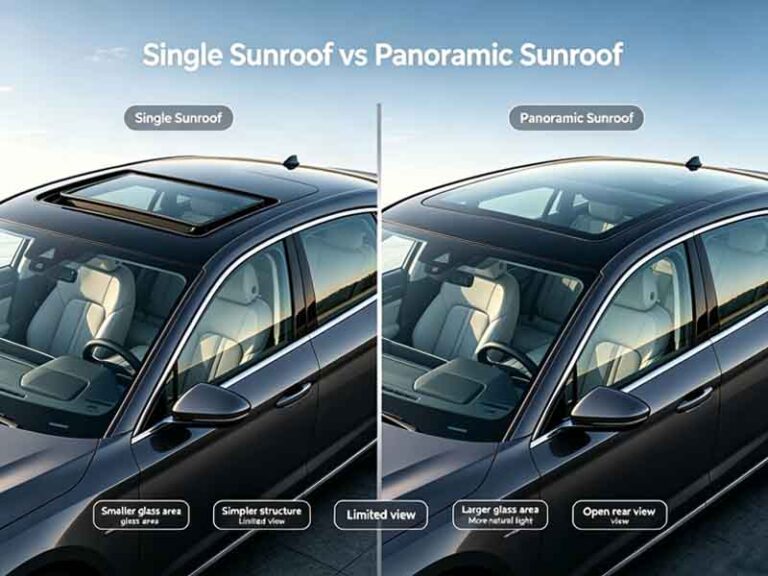
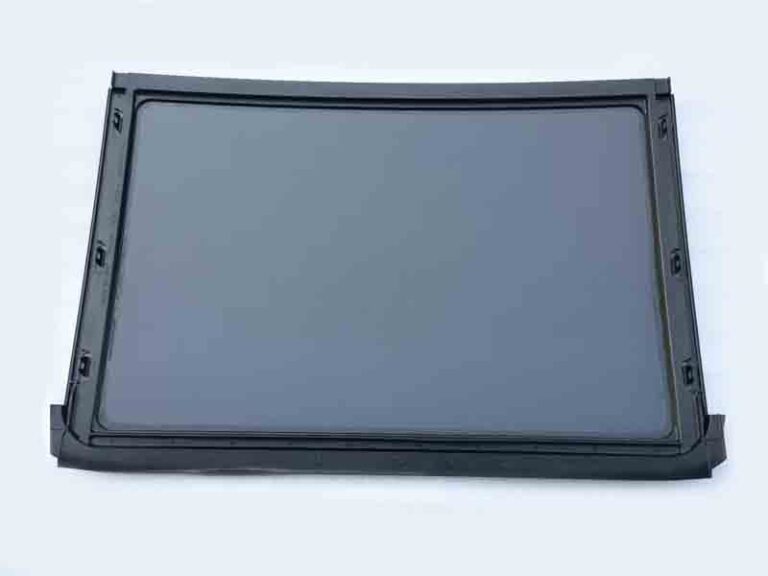
Panoramic sunroof glass is not flat but curved, designed to match the specific roof structure of the vehicle perfectly. Even within the same model, differences in production year or configuration level can affect issues such as glass curvature, thickness, mounting hole position, sensor, or guide rail alignment.
We have encountered cases where universal replacement glass resulted in uneven gaps, wind noise, or sealing problems after installation. These issues damage not only the supplier’s reputation but also that of the repair shop.
Professional aftermarket suppliers should maintain a detailed vehicle database and be able to match products based on the Vehicle Identification Number (VIN) or exact production year.
In our own production process, we conduct real-vehicle mold comparisons for best-selling European and American models, as well as popular SUVs. Our goal is simple: to ensure a structural match of over 98% with the original guide rails, motor, and sealing system. Precise installation avoids rework at repair shops, saving time and money.
II. Safety Standards – Tempered Glass vs. Laminated Glass
Unlike side windows, panoramic sunroof glass must be able to withstand strong wind pressure and debris impact.
In the aftermarket, there are two main manufacturing processes: 1. Tempered glass (which breaks into small particles), this process is economical and suitable for most economy and mid-range vehicles; 2. Laminated glass (including PVB interlayer), which remains intact after breakage and offers better sound insulation and impact resistance, is often used in high-end vehicles or those with integrated sunshades.
A common mistake wholesalers make is focusing solely on price. Low-priced glass may have uneven internal stress distribution, increasing the risk of spontaneous breakage during transport or installation.
Certified products should bear the corresponding markings, such as the EU E mark, US DOT certification, or China CCC certification. These are not just compliance labels; they also protect repair shops from legal and liability risks.
III. Packaging and Logistics – Hidden Cost Factors
In cross-border trade, the breakage rate reflects a supplier’s level of expertise.
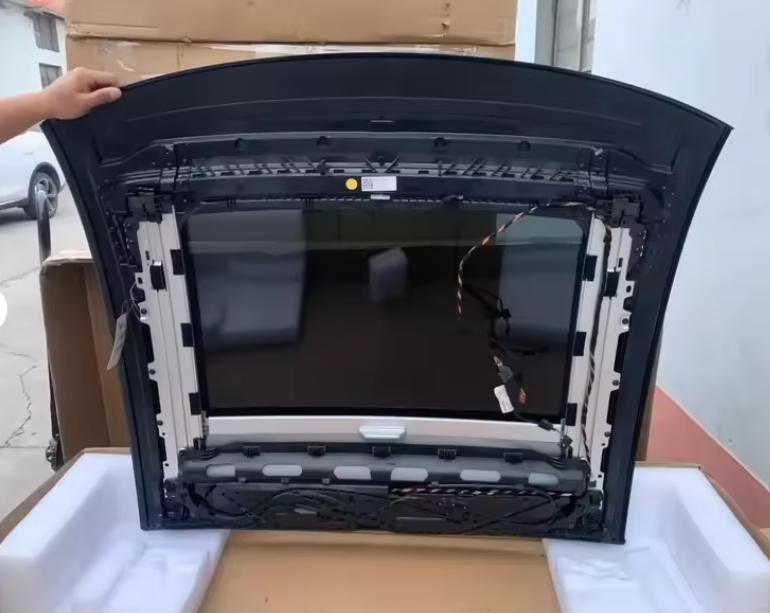
Panoramic sunroof glass is large, heavy, and irregularly shaped. Standard cardboard boxes are insufficient for long-distance sea or air transport.
Our factory uses custom-made wooden crates combined with foam suspension for secure mounting. Each glass panel is individually secured to prevent internal movement, and vulnerable edges are reinforced with corner guards.
Through proper packaging design, the breakage rate during transportation can be controlled to below 1%. For wholesalers, this means fewer insurance claims, fewer replacement disputes, and more stable inventory turnover.
Furthermore, it is crucial to inquire with suppliers about their clear replacement policy for damaged goods. After-sales responsibility is paramount.
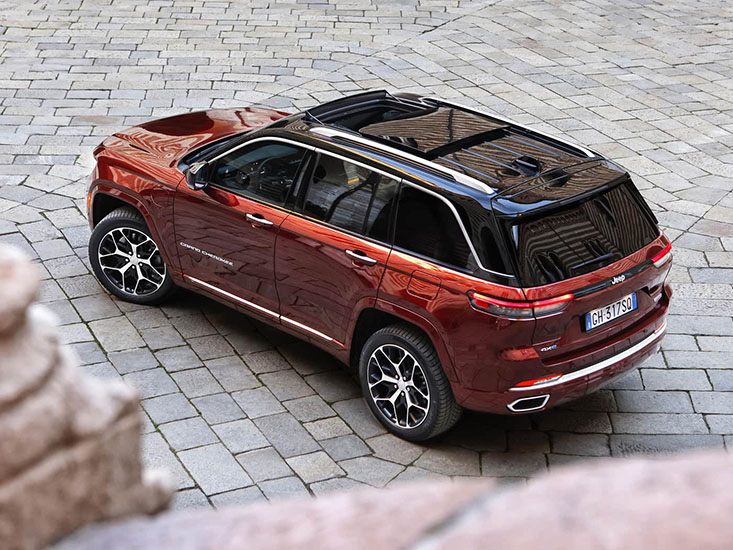
IV. Advantages of Direct Factory Supply
In the aftermarket supply chain, too many intermediaries increase costs and reduce transparency.
Working directly with manufacturers offers the following significant advantages:
1. Better pricing structure
2. Eliminating unnecessary trading links allows for better profit control.
3. Direct technical support
In case of installation problems, repair shops can obtain guidance, drawings, or video support directly from the factory team.
4. Customization flexibility
For high-volume markets, packaging design, labeling, and even glass color options (such as privacy gray) can be customized.
The automotive glass aftermarket is transforming. It is no longer solely a price-driven market. Quality, stability, installation precision, and service response speed are becoming true competitive factors.
High-quality panoramic sunroof glass not only restores vehicle functionality but also rebuilds owner confidence in repair shops.
If you are looking for a reliable panoramic sunroof glass supplier or need compatibility information for specific vehicle models, please feel free to contact our sales and technical team. We are happy to provide sample testing support and certification documents tailored to your target market.