5 Hidden Factors That Drive Up OEM Sunroof Glass Pricing
For most car owners, the sunroof is an important configuration to improve the driving experience. Many buyers often only pay attention to raw materials and basic processing costs when accounting for the cost of sunroof glass, and it is easy to ignore several hidden factors that have a great influence on the final pricing.
Cost of precision certification and adaptation test for original factory.
Different from the common replacement parts in the market, OEM sunroof glass needs to be accurately matched with the specific vehicle requirements of the whole vehicle factory, including dimensional parameters, sealing performance standards, and tolerance range of the assembly process. In order to meet this highly customized adaptation demand, suppliers must carry out careful and strict test procedures for each specific vehicle, such as repeated air tightness verification, long-term vibration durability test, and adaptability test to simulate thermal expansion and cold contraction in different climatic environments.
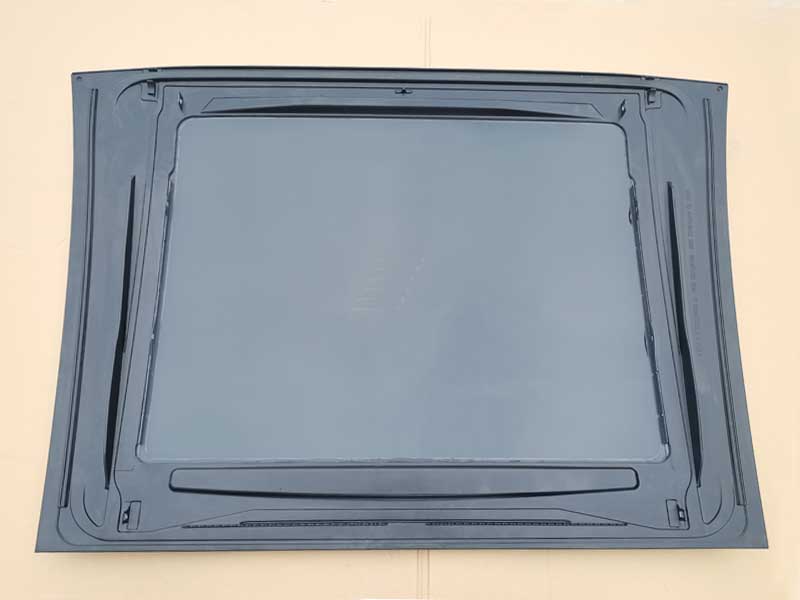
These specially designed customized tests are not only time-consuming and labor-intensive, but also require corresponding technology and equipment investment, so the related costs will be allocated to the final pricing of each sunroof glass one by one. However, in the actual procurement process, many purchasers often ignore or underestimate this part of the necessary testing and adaptation investment because of the lack of careful combing of the preliminary requirements, which leads to the deviation of the overall cost budget.
Material premium of customized glass functional interlayer.
Nowadays, the sunroof glass of many models is not only a simple light transmission structure, but also a variety of hidden customization functions are realized by integrating advanced sandwich technology. For example, many products will be specially built with an infrared absorption layer that can effectively isolate external heat to help maintain the stability of the temperature inside the car, or add a specially designed noise-reducing and sound-insulating interlayer to significantly reduce the noise transmitted to the carriage during driving. At the same time, in order to block the potential impact of ultraviolet rays on the skin of drivers and passengers, many sunroof glasses are additionally coated with professional anti-ultraviolet coatings.
Some models will pre-set a highly transparent signal penetration window in a specific area of the sunroof based on the needs of intelligent driving or entertainment systems, so as to perfectly adapt to the installation of equipment such as a head-up display system or car antenna, and ensure unimpeded signal transmission. The realization of these special functions can not be separated from customized raw materials, and additional fine processing procedures, and the production process complexity and material cost are much higher than those of ordinary tempered glass. Therefore, this part of the additional cost caused by the high-performance customization function is often not clearly listed as an independent item in the basic quotation list of vehicles, but is integrated into the overall configuration or the price of optional packages.
Cost allocation of molds for small batch orders.
If it involves some niche models that have been discontinued, or specially customized models, the demand for sunroof glass and its original accessories is usually very limited. For suppliers, even if the demand is small, in order to meet the manufacturing requirements, corresponding die-cutting molds and thermoforming molds must be specially made. Because the development cost of this kind of mold is relatively fixed, it can’t be shared through large orders, and the amortization cost of the mold borne by each sunroof glass will increase significantly, which will directly lead to a significant increase in the terminal price of a single glass. This feature of cost structure is the key factor for the high price of original parts of many niche models.
Long-term supply of stocking and storage costs.
In the automobile industry, vehicle manufacturers usually sign long-term cooperation agreements with their OEM suppliers, and one of the core requirements is that suppliers should provide after-sales parts support for many years. Even after some models are discontinued, suppliers are still required to maintain the production capacity and stock of specific parts (such as sunroof glass) to ensure the stable supply of after-sales market and maintenance services. This long-term storage management and capacity reservation have brought high operating costs, including indirect expenses such as storage expenses, inventory capital occupation, and production line maintenance. In order to balance these continuous costs, suppliers often share the possible future costs in advance in the pricing strategy of previous orders, thus forming a hidden cost structure. Although this part of the cost is not directly reflected in the surface price of the product, it has actually become one of the important factors affecting the final pricing.
Service cost of after-sales and quality assurance system
In order to provide reliable quality assurance service, manufacturers need to establish a perfect after-sales service network and spare parts inventory system. This requires not only a lot of money, but also the training of professional technicians. In addition, in order to ensure the quality of quality assurance services, manufacturers also need to conduct regular quality monitoring and customer feedback collection, which will increase operating costs.
More importantly, the installation of the original sunroof glass also requires professional technology and tools. The main engine factory will provide detailed installation guidelines and special tools to ensure that the glass can be installed correctly and avoid problems such as water leakage and abnormal sound. These technical support and training costs are also included in the final price.
FAQ
Q: The sunroof glass is broken. Can you just replace the glass without replacing the whole sunroof assembly?
A: Some models support replacing the sunroof glass separately without replacing the entire sunroof assembly (including guide rail, sunshade, motor, etc.).
Q: Will there be water leakage after changing the sunroof glass? How to avoid it?
A: The sunroof glass leaks after replacement, usually because the old sealant is not cleaned, the new sealant is not evenly applied, or the glass is not aligned correctly. Choosing experienced technicians to operate and ensuring that the sealant has enough curing time can greatly reduce the risk of water leakage. After replacement, it is recommended to observe whether there are signs of water seepage for a period of time.
Q: Can the sunroof glass continue to open if it is cracked? Do you need to change it right away?
A: If there is only a slight crack on the surface without affecting the sealing performance, it can be used temporarily, but it is recommended to replace it as soon as possible. Because the sunroof glass is a sandwich structure, the crack will gradually expand with the vibration and temperature change of the vehicle, and once it breaks, it may lead to water leakage or even glass fragments falling. If the crack has penetrated through the glass or the sunroof cannot be closed normally, it should be replaced immediately.