OEM vs Aftermarket Sunroof Glass: Which One Should You Choose?
The automobile sunroof has already entered the daily car scene from the high-end configuration, adding a lot of comfort to the driving experience. However, when the window glass is accidentally damaged and needs to be replaced, many car owners will be entangled: whether to choose OEM glass from the original factory or aftermarket glass produced by a third party? Both of them seem to be glass, but there are many differences in quality, adaptability, and long-term use experience.
- Core differences between the original factory and the auxiliary factory of automobile sunroof glass
- Adaptability and Experience —— Difference of Actual Feeling after Installation of Automobile Sunroof
- Guarantee and peace of mind-sunroof after-sales policy and long-term risk difference
- How to make a choice according to the demand for sunroof
Core differences between the original factory and the auxiliary factory of automobile sunroof glass
To understand the difference between the two kinds of sunroof glass, we must first start from their production sources. OEM glass is a matching component determined by automobile brands in the vehicle research and development stage.
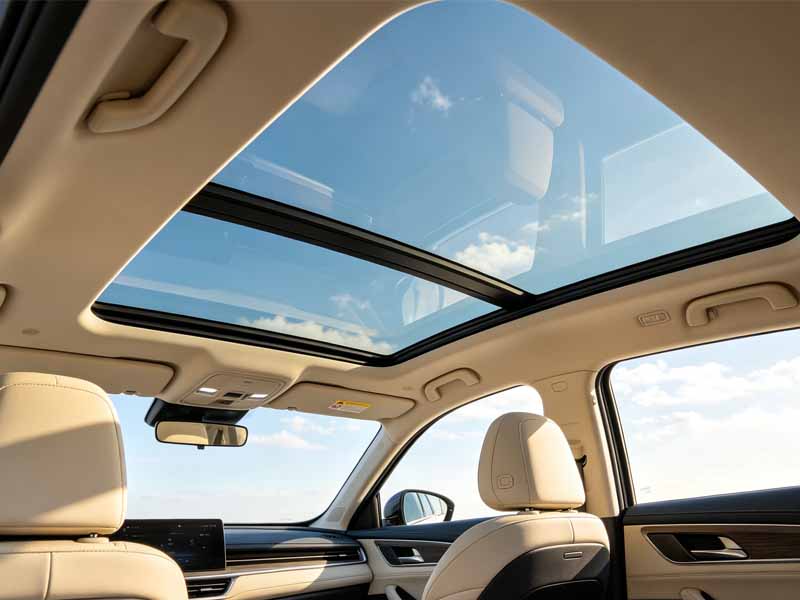
It is produced by brand-certified suppliers according to strict technical standards, and the material formula and processing technology are completely matched with the vehicle’s ex-factory condition. It can be said that OEM glass is the “original equipment” of the vehicle, and every detail has been repeatedly verified by the brand.
After-sales glass is a substitute accessory produced by an independent third-party manufacturer, which usually does not directly supply automobile brands, but carries out reverse research and development according to the model data on the market.
Some regular manufacturers will refer to the original factory standards, but some manufacturers will simplify the materials and processes in order to reduce costs. However, with the development of the industry, the production technology of many large after-sales parts manufacturers is quite mature, and the quality of some products can reach a level close to OEM.
The core difference between the two is the certification system. OEM sunroof glass will undergo several rounds of rigorous testing by automobile brands, including impact resistance, sealing performance, optical performance, and other dimensions.
Each glass has a brand-specific certification mark. However, there is no uniform compulsory certification standard for after-sales glass, and the quality depends entirely on the manufacturer’s self-requirements, which is also the fundamental source of the difference between the two.
Adaptability and Experience —— Difference of Actual Feeling after Installation of Automobile Sunroof
Sunroof glass is not an isolated component; it needs to work with many components, such as the sunroof frame, sealing strip, and drainage system of the vehicle, so adaptability is the key consideration in selection. OEM glass is deeply integrated with the overall structure of the vehicle at the design stage, so that it can be perfectly stitched in terms of the radius and size of the glass and the accuracy of the installation hole position.
After installation, it can not only perfectly fit the sealing strip to ensure good waterproof and sound insulation effect, but also avoid the abnormal sound of the sunroof caused by dimensional deviation.
In contrast, the adaptability of aftermarket glass depends on the R&D ability of the manufacturer. The products produced by regular manufacturers usually reproduce the shape of the original glass by high-precision scanning technology, and the adaptability reaches a high level, but there may still be slight dimensional deviation.
However, some small factory products may have obvious differences in radius or size. After installation, they are prone to problems such as lax sealing and poor sunroof opening and closing, and long-term use may also lead to water leakage or glass displacement.
In the use experience, the optical performance of OEM glass is usually more stable, without obvious distortion or color difference, which can ensure a good visual field effect. However, some after-sales glasses may lack light transmittance or heat insulation performance, and long-term use may affect driving comfort. In addition, the surface treatment process of OEM glass is more mature, making it not easy to scratches, and it can also better resist ultraviolet corrosion.
Guarantee and peace of mind-sunroof after-sales policy and long-term risk difference
In addition to the quality of the product itself, after-sales guarantee is also a factor that cannot be ignored when choosing sunroof glass. OEM glass usually enjoys the same warranty service as the whole vehicle, and can be replaced free of charge if there are quality problems caused by non-human factors during the warranty period. Moreover, the replacement of OEM glass in formal channels will not affect the overall warranty status of the vehicle.
However, the warranty policies for after-sales glass are uneven. Some manufacturers provide a short-term warranty, while others have no warranty commitment. If there are problems such as water leakage and cracking after installation, the owner may have to bear the maintenance costs himself. In addition, the installation process of replacing sunroof glass will also affect the long-term use effect.
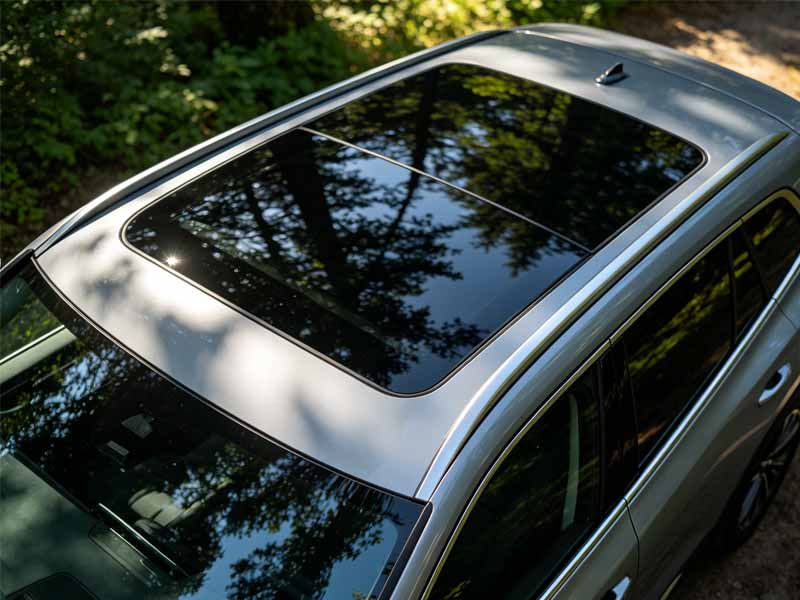
Regular brand service outlets will use special sealant and tools when replacing OEM glass, and operate according to the original factory standard process, which can ensure the installation quality to the maximum extent. However, some ordinary repair shops may not be standardized in the installation process, and even if better quality after-sales glass is used, it may lead to subsequent problems due to improper installation.
How to make a choice according to the demand for sunroof
There is no absolute difference between OEM and after-sales sunroof glass. The key is to make a choice according to your own needs and actual situation. If the vehicle is still within the warranty period, it is recommended to give priority to OEM glass, which can not only ensure the adaptability and quality, but also enjoy a complete after-sales guarantee, so as to avoid the impact of the use of non-original accessories on the vehicle warranty.
If the vehicle has passed the warranty period and pays more attention to cost performance, you can choose a regular brand of after-sales glass, but you must choose a manufacturer with a good reputation and install it in a professional repair shop. Before installation, it is best to carefully check the workmanship and identification of the glass to ensure the quality and adaptability of the product.
For car owners who pay attention to long-term use experience and vehicle maintenance rate, OEM glass is still a more reliable choice, which can ensure the original state of the vehicle and avoid potential problems caused by replacing the accessories of the sub-factory. For car owners who just want to temporarily repair their vehicles and have a replacement plan in the short term, the more cost-effective after-sales glass is also an option to consider.
In short, when choosing sunroof glass, we should not only look at the surface differences, but also comprehensively consider many factors such as quality, adaptability, and after-sales protection, and make the most suitable choice according to our actual needs. After all, the sunroof is an important part of the vehicle, and its quality is directly related to the comfort and safety of daily use. Careful selection can avoid subsequent troubles.
FAQ
Q: What is the price difference between the original sunroof glass and the auxiliary sunroof glass?
A: Generally speaking, the price of the original sunroof glass is usually about 30%-50% higher than that of the vice-factory glass of the same specification. Coupled with the installation cost, the overall spending gap will be more obvious, and the specific price difference will be different according to the vehicle positioning. You can contact us with the model you want, and we will reply as soon as possible!
Q: Will the replacement of the sunroof glass in the auxiliary factory affect the vehicle warranty?
A: If the vehicle is still within the warranty period of the whole vehicle, replacing the sunroof glass alone will not affect the warranty of other parts of the vehicle. However, if the sunroof-related parts are damaged due to improper operation of replacing the auxiliary factory glass, it is impossible to claim compensation from the original factory for this part of the damage.
Q: Will the sunroof glass of the auxiliary factory leak water?
A: As long as it is the regular and qualified glass of the auxiliary factory, the sealing performance can be guaranteed if it is installed in a professional store. Most of the water leakage is caused by unqualified glass workmanship or inadequate installation technology, and not all the glass of the auxiliary factory will have such problems.