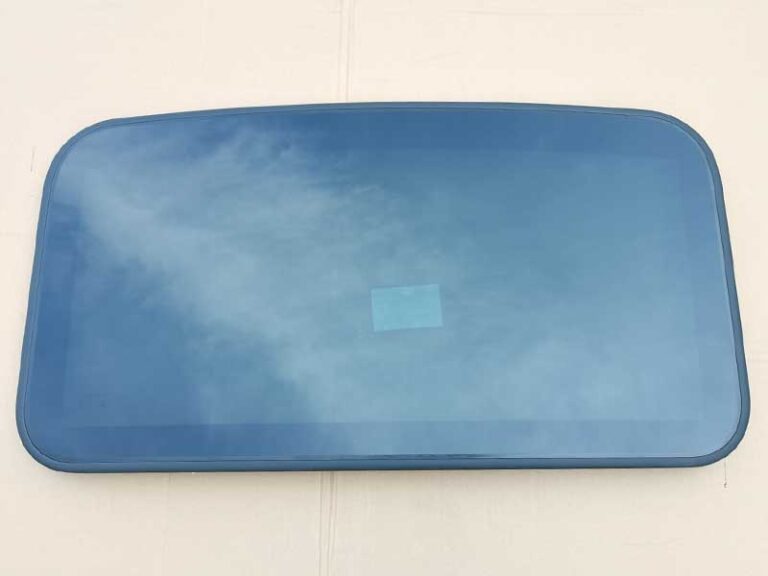
Sunroof Glass Cost Breakdown: How Glass Type Affects the Price
One of the core sources of the price difference of automobile sunroof glass is the different types of glass used. The differences of different glasses in raw material formula, production technology, safety performance, and additional functions will eventually be reflected in the terminal price.
- Ordinary tempered glass: the cost-effective choice of the sunroof, the main force of basic models
- Laminated tempered glass: the balance between safety and comfort
- Heat-insulating coated glass: the "cooling artifact" in summer cars
- Intelligent dimming glass: a high-end option with a full sense of technology
Ordinary tempered glass: the cost-effective choice of the sunroof, the main force of basic models
Ordinary tempered glass is the most common sunroof glass material on the market at present, and it is also the original standard for most family cars. Through the process of high-temperature heating and rapid cooling, the glass surface forms compressive stress, which is 3-5 times stronger than ordinary glass.
After being broken, it will become small particles without edges and corners, reducing the risk of injury.
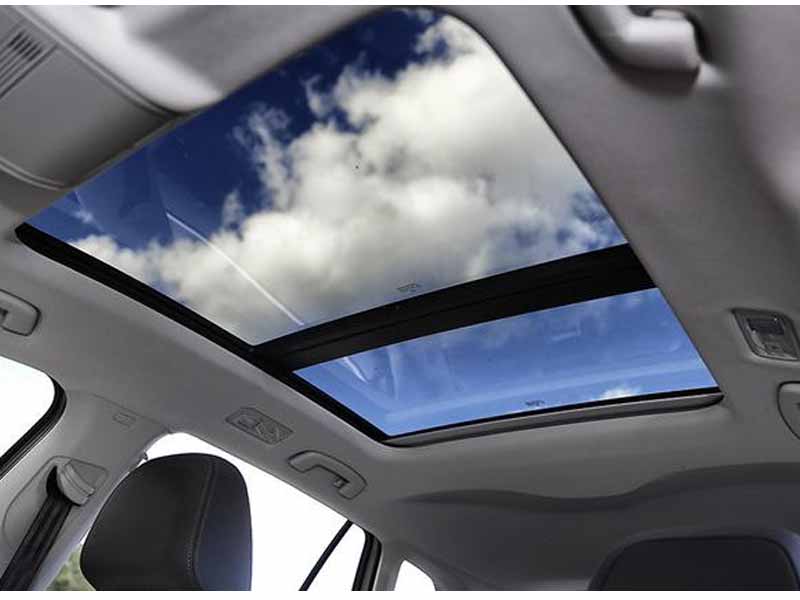
The advantage of this kind of glass is high cost performance, which can meet the daily basic needs, but it also has obvious shortcomings: it does not have the function of heat insulation and ultraviolet protection, and the temperature inside the car will rise rapidly when the sun is in direct sunlight in summer, and long-term exposure may also lead to aging of the interior;
Moreover, its sound insulation effect is general, and the wind noise will be more obvious when driving at high speed. For car owners with a limited budget and low requirements for sunroof function, ordinary tempered glass is an adequate choice.
Laminated tempered glass: the balance between safety and comfort
Laminated tempered glass is made by sandwiching a layer of PVB (polyvinyl butyral) film between two layers of tempered glass and bonding at high temperature and high pressure. With this structure, when it is impacted, even if the glass is broken, the fragments will be stuck by the film, which will not splash and hurt people, and the safety is better than that of ordinary tempered glass by going up one flight of stairs.
At the same time, PVB film can effectively filter more than 90% ultraviolet rays, reduce the fading and aging of interior, and improve the sound insulation effect by about 30% compared with ordinary tempered glass.
Many joint venture vehicles and mid-range models that pay attention to safety and comfort will be equipped with this glass at the original factory.
If you often drive with your family, or the ultraviolet rays in your area are strong, laminated tempered glass is a safer choice. Its improvement in safety, heat insulation, and sound insulation can obviously improve the car experience.
Heat-insulating coated glass: the “cooling artifact” in summer cars
On the basis of laminated tempered glass, heat-insulating coated glass is added with one or more layers of metal oxide coatings, such as silver, indium, and tin. These coatings can reflect infrared rays, prevent the heat of the sun from entering the car, and at the same time maintain good light transmittance.
Test data show that high-quality heat-insulating coated glass can reduce the temperature in the car by 5-10℃, reduce the air conditioning load by about 20%, make the car cooler in hot summer, and save fuel.
For car owners who live in high temperature areas or often drive for a long time in summer, the initial investment of heat-insulating coated glass can bring long-term comfort experience and energy saving.
However, it should be noted that inferior coated glass may have problems such as coating shedding and uneven reflection, which will affect the line of sight and beauty, so you must choose products with regular channels when replacing them.
Intelligent dimming glass: a high-end option with a full sense of technology
Intelligent dimming glass is a “luxury” in sunroof glass. It injects liquid crystal molecules between two layers of glass, and the arrangement of liquid crystal molecules is controlled by current to realize the switching between transparency and atomization of glass.
Press the button, the glass can instantly change from transparent to a frosted state, which can not only increase privacy, but also block direct sunlight and reduce energy consumption of air conditioning. The smart sunroofs of some high-end models can also be dimmed in different areas to meet the needs of passengers in different locations.
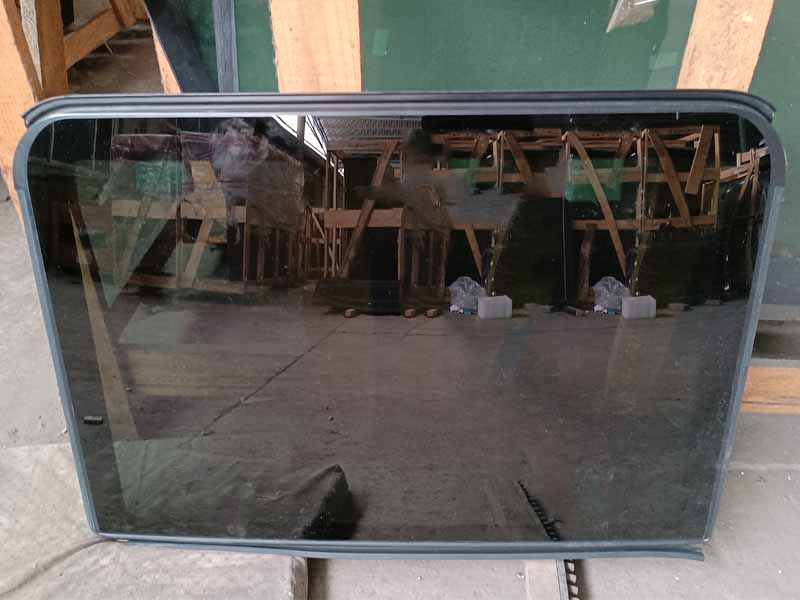
Intelligent dimming glass is mainly equipped on high-end models of luxury brands, such as Mercedes-Benz S-Class, BMW 7 Series, Tesla Model X, and so on. It represents the highest level of sunroof technology, which can bring the ultimate comfort experience and sense of technology, but the high price also makes it the choice of a few people.
If the ultimate car experience is pursued and the budget is sufficient, intelligent dimming glass can instantly upgrade the car.
The price difference of sunroof glass is essentially the performance difference brought by different materials and technologies. Ordinary tempered glass is suitable for car owners with a limited budget, laminated tempered glass gives consideration to safety and comfort, heat-insulating coated glass is just needed in summer, and intelligent dimming glass is the first choice for technology enthusiasts.
When replacing the sunroof glass, we should not only consider the type of glass, but also pay attention to choosing the products of regular channels to ensure the quality and adaptability of the glass. At the same time, we should also pay attention to the maintenance of the sunroof, regularly clean the track, and check the sealing strip to prolong the service life of the sunroof glass.
FAQ
What are the advantages and disadvantages of panoramic sunroof compared with ordinary sunroof?
The panoramic sunroof has a wide field of vision, which can enhance the lighting and luxury in the car, so that the rear passengers can also enjoy a transparent experience; However, the structure is more complicated, the rigidity of the car body is higher, and the later maintenance cost is higher than that of the ordinary sunroof.
How to maintain the sunroof glass daily?
Regularly clean the dust in the slide rail and gap to avoid wearing the sealing strip; Wipe the sealing strip with gauze dipped in cleaning water every 2-3 months, dry it and apply a little engine oil or butter for lubrication; Spray plastic protective agent on the sealing strip before the rainy season, and dry the water at the edge of the sunroof in time after snow in winter to prevent freezing.
What are the functional differences between different types of sunroof glass?
Ordinary tempered glass focuses on basic safety, and it is small particles without edges and corners after being broken; Laminated tempered glass adds PVB film to improve sound insulation and anti-ultraviolet ability; The heat-insulating coated glass can reflect infrared rays and reduce the temperature inside the car; Intelligent dimming glass can control transparency through current, giving consideration to privacy and lighting.