Automotive Sunroof Glass Maintenance Hacks for Longevity
Automotive sunroofs can bring a wide field of vision and a ventilation experience for driving and traveling, but it is easy for dust and leaves in daily use, and there may be aging sealing problems due to sun and rain. To prolong the service life of sunroof glass, it is the key to do daily maintenance.
- Daily cleaning of automotive sunroof: the basic line of defense against stain erosion
- Check the sunroof regularly: check the potential trouble ahead of time.
- External environmental protection: reduce the damage of sunroof glass under extreme conditions.
- Emergency treatment: a guide to quickly solve small problems in sunroof glass
Daily cleaning of automotive sunroof: the basic line of defense against stain erosion
In the daily maintenance of sunroofs, keeping them clean is the basic and vital link, and we must adhere to the routine cleaning work. In particular, we should pay attention to regularly cleaning the dust, leaves, and other small sundries accumulated in the sunroof track and its gaps.
If these sundries are accumulated for a long time, they will not only affect the appearance, but also hinder the normal opening and closing of the sunroof, and even lead to lax sealing.

When cleaning, it is recommended to use a soft brush or a special small brush to gently sweep away the floating dust and loose particles on the surface of the track and gap.
Then, take a semi-dry and clean rag and gently wipe the glass surface to remove stains such as water stains and fingerprints. Then, carefully wipe the track part; the action should be as gentle as possible, and avoid using any hard tools or articles to prevent unnecessary scratches or damage to the glass or metal track.
When cleaning glass, it is recommended to choose a neutral special cleaner, which is mild in nature and can effectively decontaminate without damaging the material. Be sure to avoid using strong cleaning products containing strong acids or strong alkalis, because they may corrode the special coating on the glass surface of the sunroof and the key sealing strips around it, which will accelerate the aging of parts over time and affect the airtightness and service life of the sunroof.
Check the sunroof regularly: check the potential trouble ahead of time.
In addition to daily cleaning, regular inspection is also key to maintaining the sunroof glass. It is recommended that the sunroof system be thoroughly inspected every three months.
Focus on three parts: first, check the glass itself to see if there are any tiny cracks or damages, especially at the edge, which are easy to expand when driving at high speed or the temperature difference changes;
Secondly, the sealing rubber strip, check whether there is aging, cracking, deformation, once the rubber strip loses elasticity, there will be water leakage; Finally, the guide rail and motor of the sunroof. If there are sundries on the guide rail, the sunroof switch will be stuck, and the abnormal sound of the motor may be a signal of excessive load.
When checking, you can manually open and close the sunroof several times to feel whether the operation is smooth. If there is a jam or abnormal sound, clean the guide rail in time and add special lubricant.
When small cracks are found in the glass, do not handle them by yourself, but repair them in a professional repair shop as soon as possible to avoid the whole glass replacement caused by the spread of cracks.
In order to ensure the stability and safety of the sunroof in long-term use, it is necessary to carry out necessary lubrication and maintenance on the sealing parts regularly. Due to long-term direct exposure to the external environment, the sunroof’s sealing strip and track system are affected by sun exposure, wind and rain, dust, and temperature and humidity changes, which can lead to dry surfaces, material hardening, and even aging.
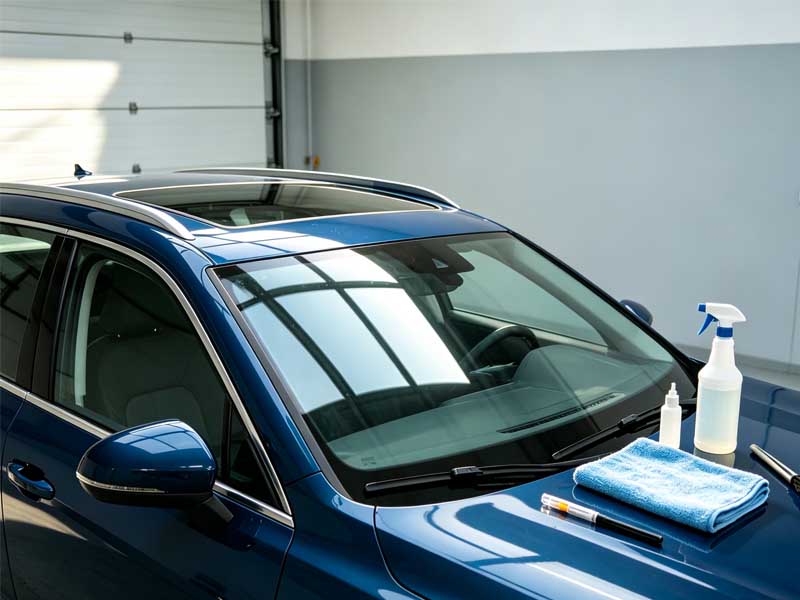
Therefore, it is suggested that a small amount of special silicon-based lubricant should be selected every six months or so and evenly applied to the surface of the sealing strip and the rail contact parts. This can effectively maintain the original softness and elasticity of the rubber strip, and at the same time ensure the smooth sliding and minimum resistance of the track during opening and closing.
Through this kind of regular maintenance, the problems such as lax sealing, air leakage and water seepage in the car caused by dry rubber strips can be obviously avoided, and at the same time, the failures such as stuck, unsmooth operation or track dislocation in the moving process of the sunroof can be prevented, thus prolonging the overall service life of the sunroof and maintaining its good use experience.
External environmental protection: reduce the damage of sunroof glass under extreme conditions.
In the usual driving life, it is also necessary to cultivate and maintain good vehicle habits to protect vehicles, especially the sunroof glass. When the vehicle is driving on a bumpy road, it is necessary to avoid opening the sunroof completely, because the impact of the road surface may lead to irregular and violent shaking of the sunroof track, which will easily deform the track structure or loosen the components over a long time, thus affecting the normal opening and closing and sealing performance of the sunroof.
At the same time, every time when cleaning the vehicle, you can take advantage of the opportunity to scrub the body and pay attention to and check whether the drain hole of the sunroof is unobstructed.
As fallen leaves, dust, and other debris may block the drainage channel, once the blockage is found, it should be dredged and cleaned with tools in time to avoid rainwater from accumulating around the sunroof on rainy days and causing leakage. If water seeps in for a long time, it will easily erode the glass sealing parts and metal frame around the sunroof, which will not only affect the appearance but also shorten the service life of related parts.
Emergency treatment: a guide to quickly solve small problems in sunroof glass
Even if the daily maintenance is in place, the sunroof glass will occasionally have some minor problems. Mastering simple emergency treatment methods can prevent minor problems from turning into major failures.
For example, when the sunroof glass is slightly scratched, a glass polishing agent can be used to repair it. Apply the polishing agent to the scratch and wipe it repeatedly with a soft cloth until the scratch disappears.
If there is slight water leakage, first check whether there is any foreign matter or aging in the sealing strip. If there is still water leakage after cleaning the foreign matter, you can replace it with a new sealing strip.
When the sunroof switch is jammed, first check the guide rail for sundries, and add lubricant after cleaning. If it still cannot be solved, then consider the motor fault.
It should be noted that for serious problems such as glass cracking and abnormal noise of the motor, do not disassemble and repair by yourself, but contact professional automotive maintenance personnel in time to avoid the expansion of the fault caused by improper operation.
FAQ
Q: Will the tiny scratches on the sunroof glass become more and more serious?
A: If it is not treated in time, the vibration of daily driving and repeated friction with sand will gradually deepen the tiny scratches, which will also affect the transparency of the glass. Polishing the tiny scratches as soon as possible can avoid the problem from getting worse.
Q: Is there anything to pay attention to when replacing the sunroof sealing strip yourself?
A: When replacing, clean up the residual colloid and sundries in the installation groove first. When installing the new rubber strip, ensure that it fits evenly to avoid leaving gaps and causing water leakage again. If you are not sure about the operation, you should ask professionals for help.
Q: How often does the sunroof guide rail need to be lubricated?
A: It is generally recommended to add it once every six months. If you often drive in a dusty environment, it can be shortened to once every three months. Instead of using ordinary engine oil or butter, it is recommended to use a silicon-based lubricant, which is not easy to absorb dust and has a longer lubrication effect.