Understanding Laminated Sunroof Glass Cost Per Unit from Factory:Key Factors That Affect the Price
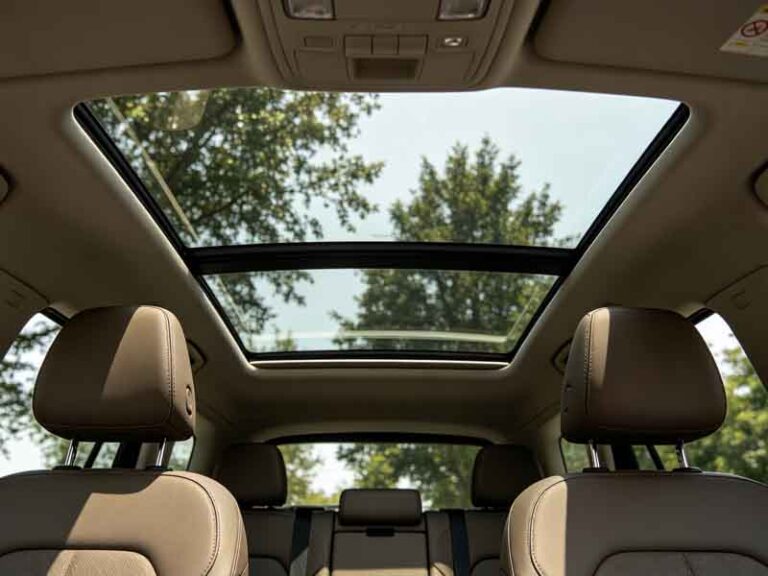
In the process of selecting and purchasing automobile sunroofs, Laminated Sunroof Glass is increasingly adopted by mid-to high-end vehicles because of its excellent sound insulation, heat insulation, and safety performance. Compared with ordinary tempered sunroof glass, the factory single-piece cost of laminated glass is affected by many factors.
- Raw materials and process accuracy of automobile sunroof glass: the basic disk of cost
- Performance and functional configuration of the sunroof: the core source of added value
- Size, shape, and thickness specifications: the sunroof cost difference caused by customization
- Market Environment and Industry Standard: External Constraints of Sunroof Cost
Raw materials and process accuracy of automobile sunroof glass: the basic disk of cost
The cost starting point of laminated sunroof glass lies in the selection of raw materials and the accuracy of processing technology. As the core raw material, there are significant differences between different qualities of the original glass sheet.
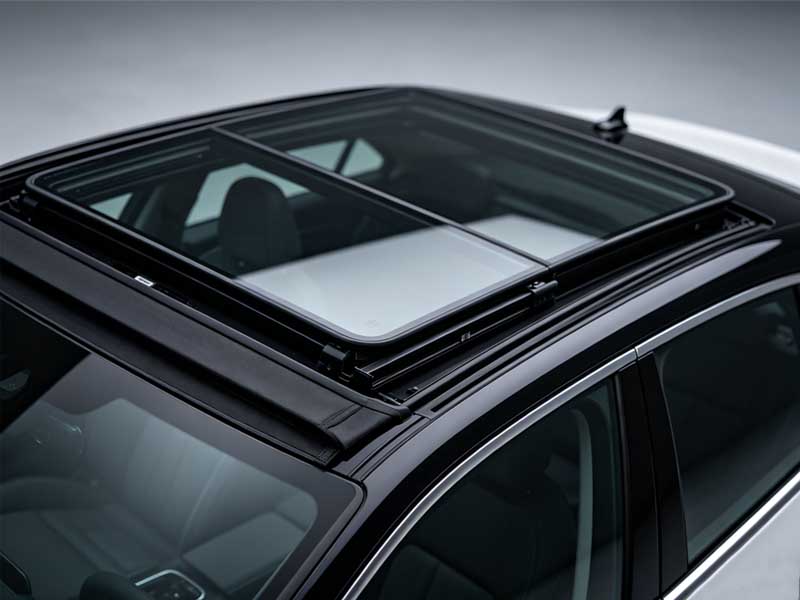
From composition ratio to impurity control, each index directly affects the performance and cost of the final product. At the same time, the material, thickness, and performance parameters of the interlayer, which plays an adhesive role in the sandwich structure, are also important parts of the cost composition.
The precision requirements of processing links also push up the production cost. From the cutting of the original sheet to the hot bending of the curved surface, each step requires accurate equipment and strict control, and a slight deviation may lead to the scrapping of the product.
The processes, such as edge grinding and tempering, will not only test the technological level but also increase the time and labor costs. In addition, in order to meet the design requirements of different models, customized mold development and adjustment will also become a hidden part of the cost.
Performance and functional configuration of the sunroof: the core source of added value
Today’s laminated sunroof glass has already surpassed the simple lighting function, and more and more additional performance has become an important driving force for cost growth.
For example, special coatings with heat insulation and sound insulation effects can effectively reduce the energy consumption and noise in the car, but the development and application costs of such coatings are high. Special functions such as privacy glass and ultraviolet-proof glass also require additional investment in raw materials and technology.
The integration of intelligent technology has further increased the cost of sunroof glass. Adjustable transparent glass equipped with sensors can automatically switch transparency according to the environment; Glass with an integrated antenna function can realize signal reception and transmission.
To realize these functions, additional components and circuits need to be embedded in the glass, which not only increases the material cost but also puts forward higher requirements for the production process.
Size, shape, and thickness specifications: the sunroof cost difference caused by customization
The size and shape of sunroof glass is one of the most intuitive factors that affect the cost of a factory piece.
The larger the size, the higher the cost.
For small sunroofs (such as traditional front-row electric sunroofs, with an area of about 0.2~0.4 square meters), the consumption of raw materials is small, the processing difficulty is low, and the cost of a single piece is relatively controllable.
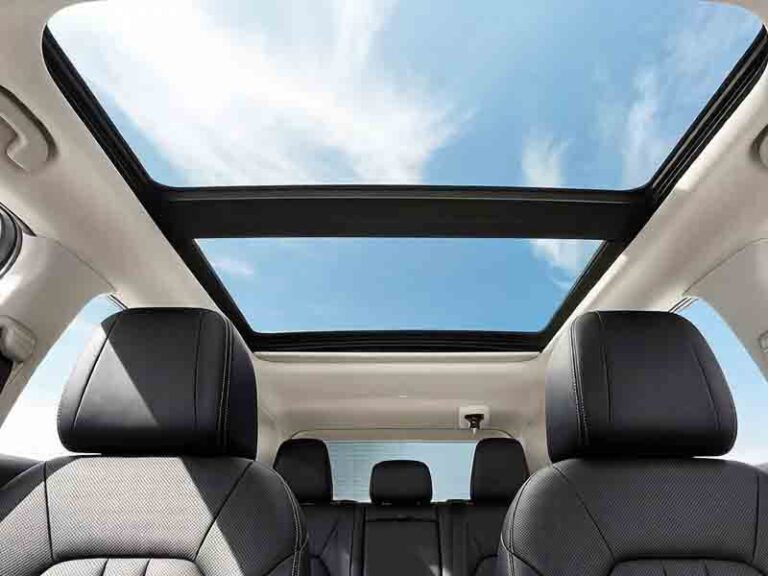
However, for panoramic sunroofs (the area can reach 1~2 square meters or even more), not only has the consumption of float glass and PVB film doubled, but also the breakage rate of large-size glass in the process of cutting, handling, laminating, and autoclave treatment is higher, and the yield rate is reduced. These loss costs will eventually be spread into the unit price of qualified products.
The more complex the shape, the more difficult it is to process.
Modern automobile sunroofs are more and more sculpted by curved surfaces with large curvature, or even double curvature glass (bending in both longitudinal and transverse directions).
Curved glass requires a hot-bending or cold-bending forming process, and the development cost of the mold is high. The alignment accuracy of curved glass is extremely high, and the rejection rate is higher than that of flat glass.
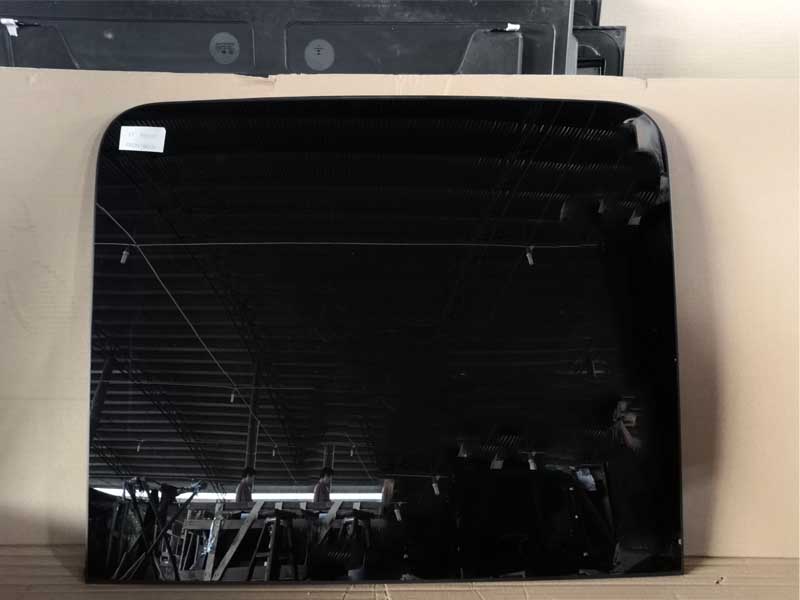
Special-shaped sunroofs (such as trapezoid, triangle, or irregular polygon) also need customized cutting dies and edging wheels, which further pushes up the cost of a single piece.
Thickness specification is also an important variable.
Sandwich sunroof glass usually consists of two pieces of 2.0mm~2.5mm glass and 0.76mm~1.52mm PVB film. If the automobile factory requires thicker glass to improve the strength or sound insulation effect (such as using the combination of 2.5mm+2.5mm+1.52mm PVB), the consumption of raw materials and processing time will increase, and the cost will naturally be higher.
Market Environment and Industry Standard: External Constraints of Sunroof Cost
In addition to the internal factors at the production end, the external market environment and industry standards are also affecting the cost of laminated sunroof glass. The price fluctuation in the upstream raw material market will be directly transmitted to the cost of glass products.
The requirements of environmental protection standards and safety regulations in the industry will also force factories to increase investment, such as upgrading environmental protection equipment and improving testing processes. These additional investments will eventually be reflected in product costs.
Changes in market demand will also indirectly affect costs. When a certain model or sunroof design becomes a popular trend, the factory will increase the production scale of the corresponding products, thus reducing the unit cost.
However, the production cost of special products aimed at niche markets is often high because of limited demand. In addition, the competitive pattern in the industry will also encourage factories to continue to invest in cost control and technology research and development to maintain market competitiveness.
FAQ
Q: Is the cost of a small sunroof necessarily lower than that of a large sunroof?
A: Not necessarily. Although small-sized sunroofs generally use fewer materials, if they are customized by a small number of people, the unit production cost may be higher than that of mass-produced large-sized sunroofs due to production restrictions.
Q: Why is there a big price difference between different brands of laminated sunroof glass of the same size?
A: In addition to the differences in raw materials and processes, brands need to meet different industry standards, and compliance investment is also different. At the same time, in order to maintain competitiveness, head enterprises will continue to invest in technology research and development and quality control, and these costs will also be reflected in the selling price.
Q: After the price increase of raw materials, will the price of laminated sunroof glass definitely go up?
A: If the market demand is great enough, the factory can offset the cost increase caused by the price increase of raw materials to some extent by expanding production and diluting the unit cost. However, if the price increase is beyond the digestion range of the scale effect, the price will still increase accordingly.