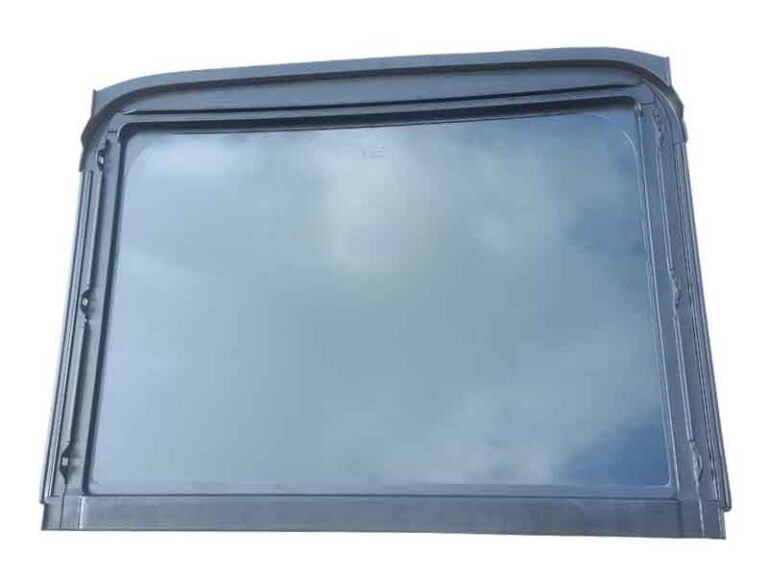
Customized OEM sunroof glass: How to Source for Vehicle Models
In the global automotive aftermarket, unlike the procurement of standardized mass-produced auto parts, the procurement of customized OEM sunroof glass has higher requirements for demand confirmation, supplier capacity, and process control. Any deviation at any link will lead to product adaptation failure, delivery delay, and even compliance risk.
Combining precise sunroof glass parameters to avoid fitting deviation from the source.
The core difficulty in procuring customized OEM sunroof glass is that there are no unified, open industry specification parameters, and final fit depends entirely on the accuracy of the initial requirements. Before docking suppliers, buyers need to sort out the following three types of core parameters to avoid dimensional errors caused by incomplete information:
Basic information of the vehicle and sunroof glass: make clear the complete brand, specific model, production year, and vehicle identification number (VIN) of the corresponding vehicle type;
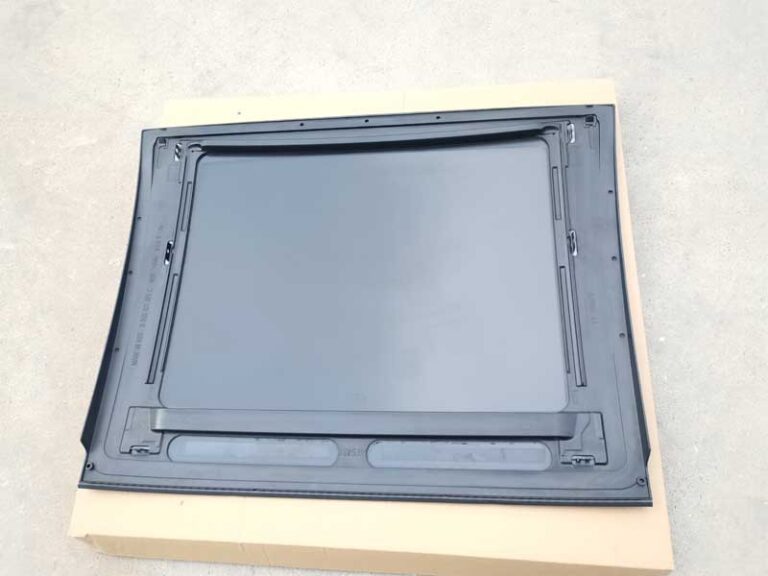
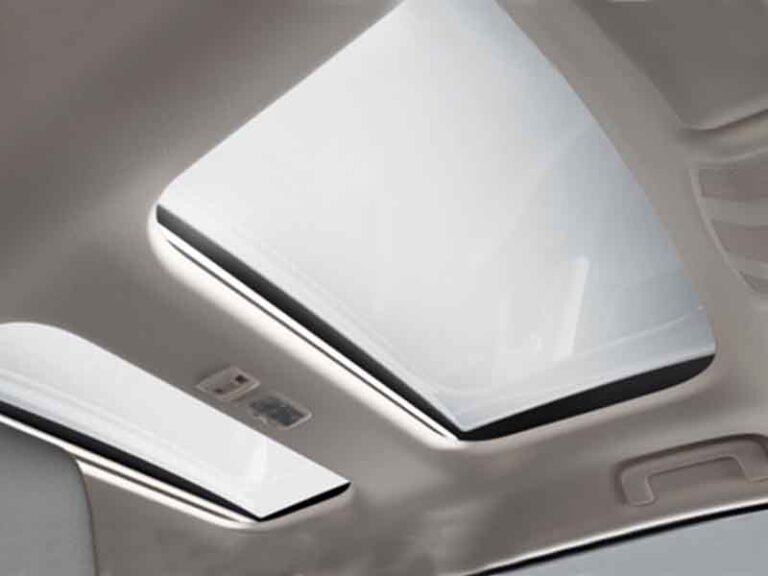
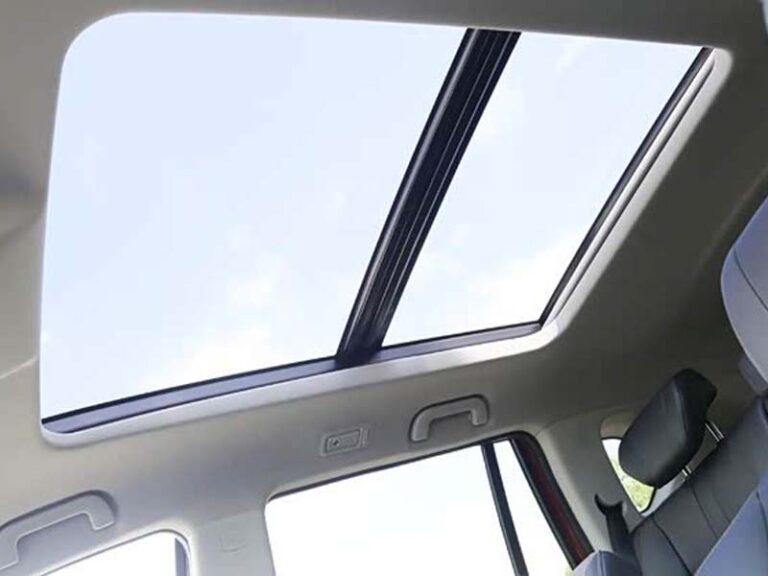
If it is a modified vehicle or a special commercial vehicle, it is necessary to further explain the type of automobile sunroof, whether it is a panoramic sunroof, a small fixed roof window, or an RV ceiling sunroof, and simultaneously explain the opening structure of the sunroof to help suppliers confirm the radius and installation requirements of the glass and avoid functional structure mismatch.
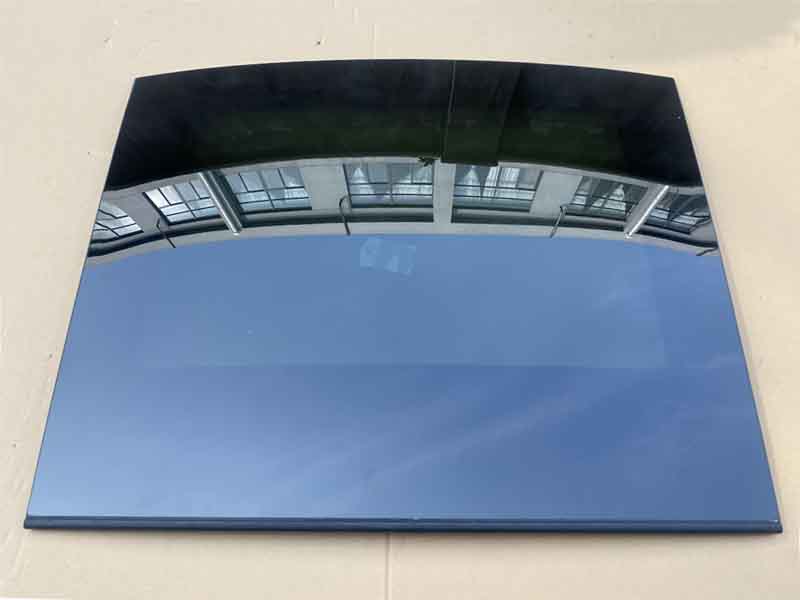
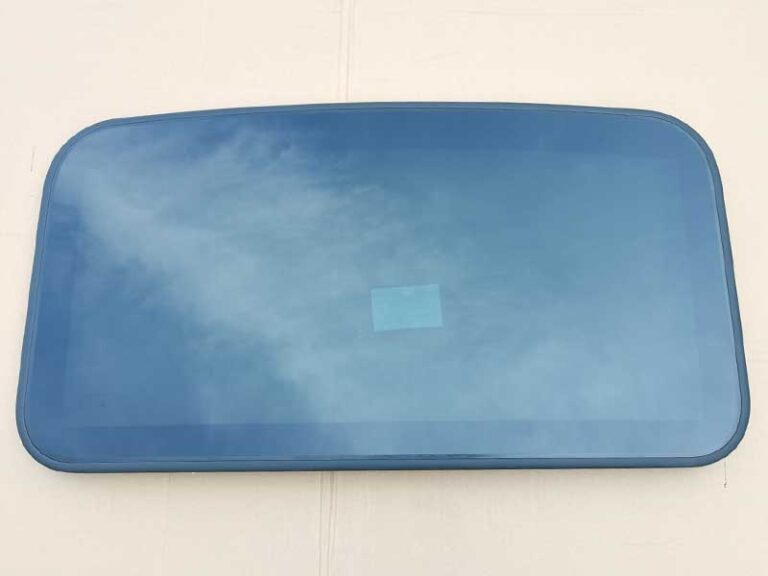
Size and accuracy parameters: give priority to the physical measurement data of the sunroof glass of the original car, including the total length, width, and thickness of the glass, the position and aperture of the installation hole, and the parameters of the glass camber;
If the CAD drawings of the original car glass are retained and provided directly to the supplier, the production error can be controlled within 0.1 mm, and the accuracy is much higher than that of production results based only on photos and manual measurement, to avoid the problem of rain leakage from the gap after installation from the source.
For discontinued vehicles for which the original drawings can’t be found, the purchaser can send the disassembled original car glass to the supplier, and the factory can restore the glass parameters 1:1 through 3D scanning, and the produced glass can be directly adapted to the sunroof frame of the original car without secondary adjustment.
Function and appearance requirements: Make clear the special functional requirements of glass, including privacy dyeing, sunshade coating, anti-ultraviolet treatment, rain sensor opening, etc. At the same time, confirm the location, size, and printing process of the brand logo, and the specific requirements for export packaging. These details are clearly confirmed at an early stage, which can avoid extra time and cost loss caused by later mold modification.
Selection of suppliers of automobile sunroof glass: comprehensive evaluation from qualification to production capacity
Finding suppliers who can read vehicle parameters is only the first step. Buyers also need to make a systematic evaluation based on the following dimensions:
1. Certification system
The core quality management system certification in the automobile industry is IATF 16949. Having this certification means that the supplier’s production process, quality control, and traceability system have passed an audit by the International Automotive Working Group. In addition, it is necessary to confirm whether the supplier holds the product certification for the target market (CCC/E-mark/DOT, etc.).
2. Production capacity and equipment
The production of customized OEM sunroof glass involves cutting, edging, drilling, hot bending/tempering, screen printing, laminating (laminated glass), testing, and other processes.
Buyers should pay attention to whether the supplier has a continuous tempering furnace (rather than an intermittent one, which is inefficient and inconsistent), a five-axis CNC machining center (used for high-precision edge grinding and drilling), and 3D curvature detection equipment (such as a laser scanner).
If conditions permit, it is recommended to inspect the factory on the spot; If it is impossible to be present, the supplier may be required to provide a video of the production site and the list of key equipment.
3. Mold development ability
Customization of automobile sunroof glass requires mold opening (hot bending mold or toughened mold).
The buyer should make it clear to the supplier: the material of the mold (the cast iron mold has a low cost but its service life is about 50,000-80,000 mold times, and the steel mold has a high cost but its service life can reach more than 150,000 mold times), the ownership of the mold (usually the buyer pays the mold opening fee and the mold belongs to the buyer), and the responsibility for mold maintenance and storage.
For multi-vehicle projects, it is suggested to choose a supplier with a 3D digital model library, which can greatly shorten the mold development cycle of new vehicle sunroof glass.
4. Sample verification process
The sample flow of regular suppliers should include: first-piece proofing (T0 sample) → full-size inspection → loading adaptation verification → durability test (ultraviolet aging for 1000 hours, temperature cycling at -40℃~105℃, salt spray test, etc.) → sample signing confirmation.
The buyer shall require the supplier to provide a complete sample inspection report and keep the signed sample as the acceptance benchmark for the bulk goods.
5. Delivery and after-sales ability
The delivery time of customized OEM sunroof glass is usually 7-10 days for conventional sizes and 15~30 days for special customization.
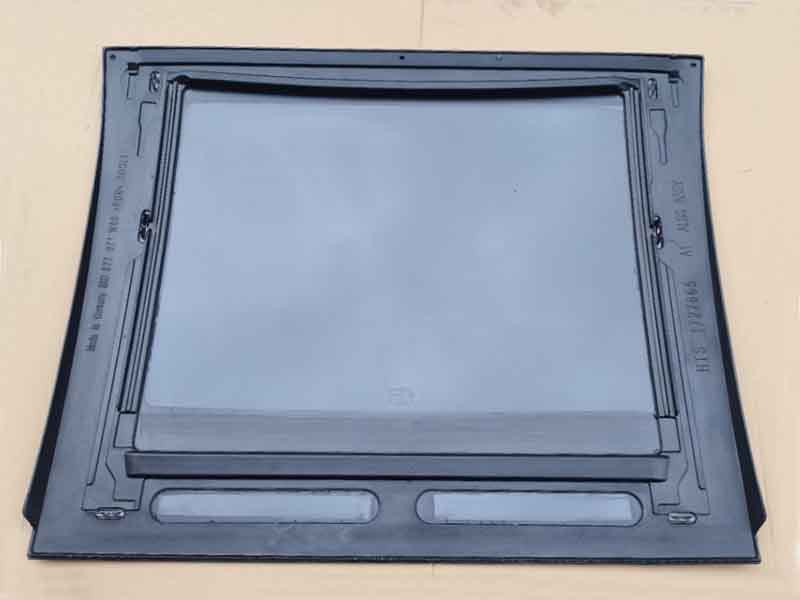
Buyers need to evaluate the supplier’s capacity flexibility-whether it can be expedited in the peak season and whether it can be stocked in the off-season. On the after-sales side, the mainstream warranty period in the industry is 2-3 years, so it is necessary to confirm the warranty scope (whether it includes the aging of sealing strips, coating peeling, etc.) and the return process.
Composition and optimization strategy of purchasing cost of automobile sunroof glass
The procurement cost of customized OEM sunroof glass mainly consists of the following parts:
| Cost item | Proportion | Explain |
| Original glass | 30%~35% | The grade of the original float glass affects the price. |
| Manufacturing | 25%~30% | Cutting, edging, hot bending/tempering, screen printing, laminating, etc. |
| Coating/functional material | 10%~15% | Low-E coating, PVB intermediate film, ultraviolet-proof film, etc. |
| Packaging logistics | 10%~15% | Special wooden box/iron frame, shockproof lining, sea/air transportation |
| Amortization of mould | 5%~10% | The mold opening fee is allocated to the cost of a single piece |
| Manage profits | 5%~10% | Including quality control, research and development support, etc. |
Suggestions for cost optimization:
1. Directly connect with the source factory of automobile sunroof glass.
Purchasing through middlemen usually generates a channel premium of 15%~25%. Establishing direct cooperation with production plants can not only obtain better quotations but also realize quality traceability and flexible customization. For large-scale centralized procurement, the scale effect can significantly reduce the unit production cost.
2. Optimize the sunroof glass packaging scheme.
Automobile sunroof glass is fragile, and the packaging cost can not be ignored. Buyers can work with suppliers to optimize the packaging scheme-for example, changing from independent wooden cases to multi-layer stacked iron frames +EPE partitions can reduce the cost of single packaging by 20%~30%.
3. Lock the long-term framework agreement
For multi-vehicle and multi-batch procurement, it is suggested to sign an annual framework agreement with suppliers, lock in the price and delivery date, and agree on the price adjustment mechanism (to deal with price fluctuations of the original glass). Long-term cooperation can usually win a lower MOQ (minimum order quantity).
4. Pay attention to mold reusability
The automobile sunroof glass of different models on the same platform may share or partially share the mold. Buyers should evaluate the possibility of cross-vehicle reuse of molds in the project planning stage to avoid repeated mold opening.
The procurement of customized OEM sunroof glass is not simply “buying glass”, but a systematic project involving vehicle engineering, mold development, quality certification, and supply chain management.
Only by establishing a complete procurement link from vehicle model parameter docking → supplier in-depth evaluation → fine cost control → risk system prevention can buyers achieve optimal cost and stable supply on the premise of ensuring quality.
FAQ
Q: What should I do if I can’t meet the supplier’s MOQ requirements for a small batch of customized models?
A: We can try to make a joint order with the purchasers of other models on the same platform, or merge this order with the orders of other models in production, or negotiate with suppliers to share part of the mold cost appropriately, so as to reduce the MOQ requirements.
Q: How is the price adjustment mechanism generally agreed to be reasonable?
A: Usually, it can be agreed to set the trigger threshold for price fluctuation based on the open futures price of the original glass or the monthly guidance price of the industry. When the fluctuation range of the benchmark price exceeds the threshold, the supply price can be adjusted accordingly, which can not only share the risks of both parties but also avoid frequent price changes.
Q: Will mold reuse affect the matching accuracy of the sunroof glass of the new model?
A: As long as we check and verify the size and frame parameters of the new model in the early stage of project planning, and reuse the mold after confirming the adaptability, it will not affect the accuracy, but will shorten the development cycle of the new model.