What Is Sunroof? A Practical Reference for B2B Procurement Staff
In the upgrading of the global industry, the sunroof has gradually evolved from an early luxury feature to the standard component of mid-to high-end models.
For B2B procurement personnel, understanding the definition, classification, manufacturing technology, and procurement points of sunroofs is a basic ability to ensure the stability of the supply chain and control procurement costs.
Definition and mainstream classification of sunroof
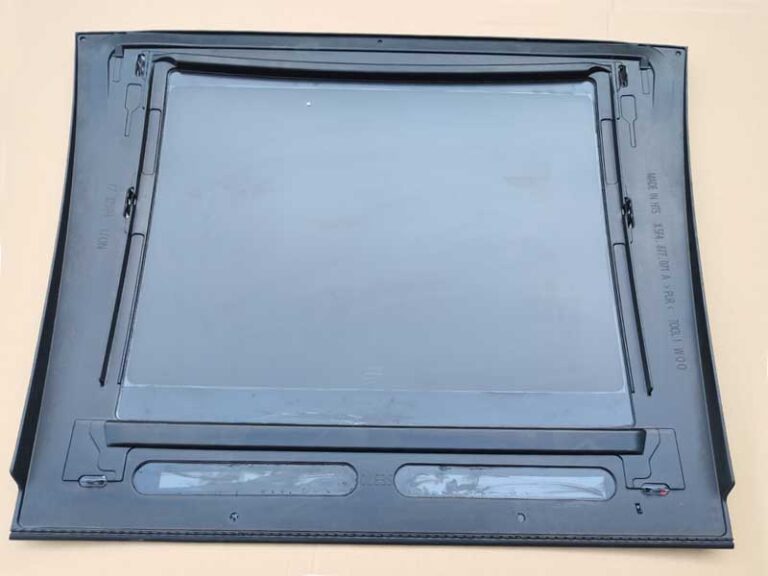
An automobile sunroof refers to the openable or fixed glass/metal panel structure installed on the top of the vehicle. Its main functions include introducing natural light, improving ventilation inside the vehicle, and enhancing the sense of driving space. According to the different structure and opening mode, sunroofs are mainly divided into the following categories:

1. Built-in Sunroof
This is the most common type of traditional sunroof. The glass panel can slide into the roof interlayer without occupying the head space in the car. The structure is relatively simple and the cost is moderate, which is widely used in A-class to B-class cars.
2. Spoiler/Pop-up Sunroof
The sunroof tilts outward, which does not occupy the internal space of the roof, and is suitable for vehicles with compact roof structure. Its advantages are a light structure and low cost, but the ventilation efficiency is slightly lower than that of the built-in type.
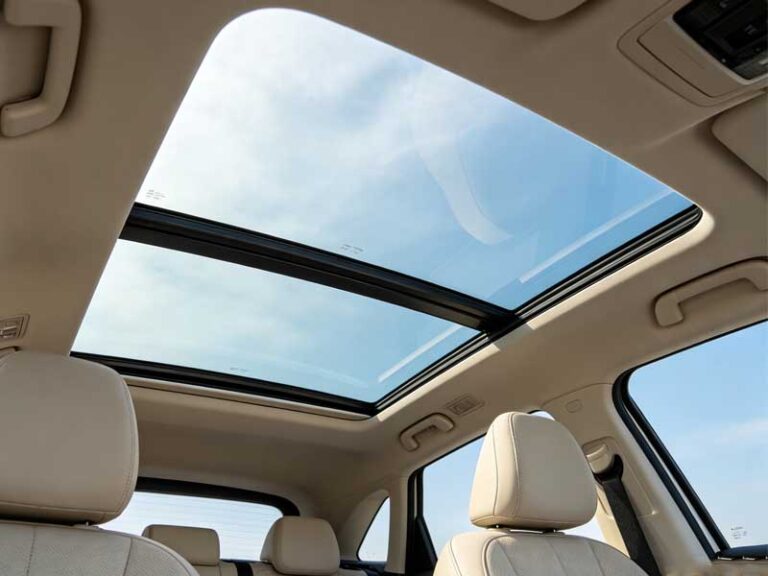
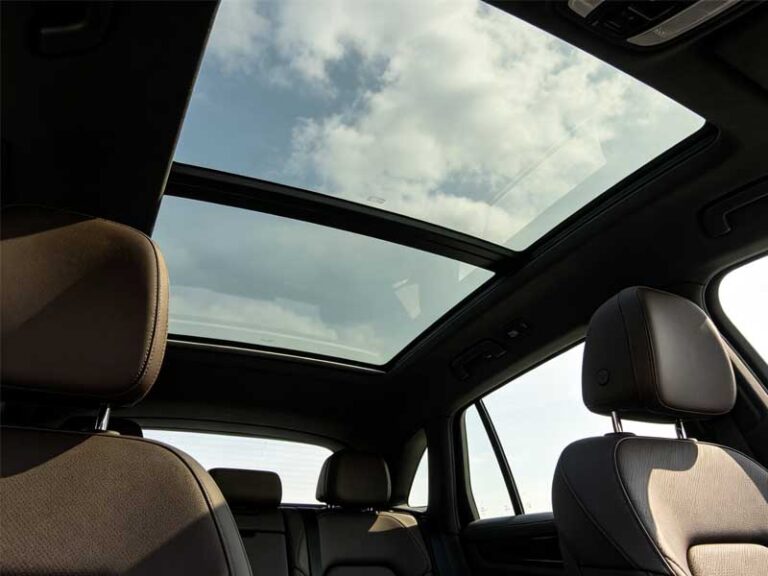
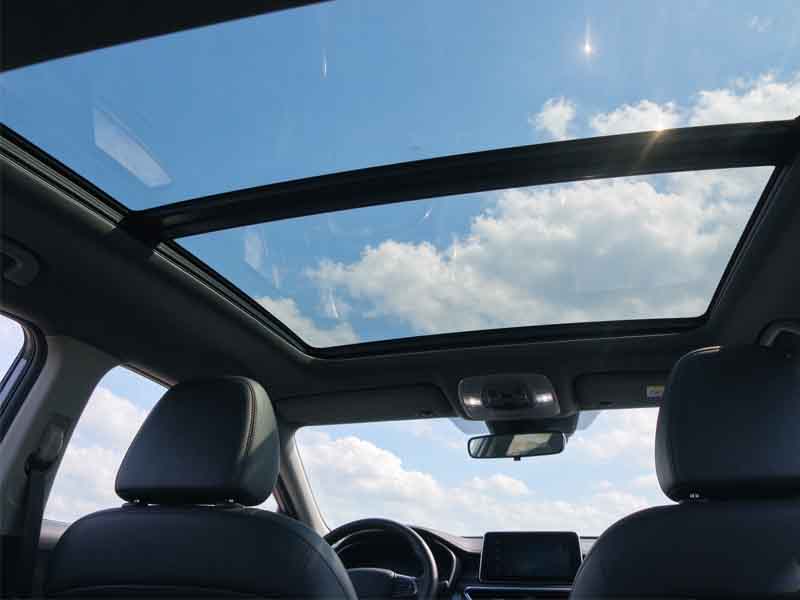
3. Panoramic Sunroof
Panoramic sunroof is the fastest-growing sub-category at present. According to industry data, the penetration rate of panoramic sunroofs in new cars has reached 31% in 2025, and it is expected to further increase to 46% in 2033. Panoramic sunroofs can be divided into:
Closed panoramic sunroof: the whole large-area glass roof can not be opened, and the light transmission area is the largest.
Sectional opening panoramic sunroof: front and rear glass sections; the front section can be opened and the rear section is fixed.
Integral panoramic sunroof: a single large-area glass that can be lifted or slid open, but the area is usually smaller than that of a segmented sunroof.
4. Solar Sunroof
Integrating solar panels into glass can provide an auxiliary power supply for vehicles (such as ventilation fans and battery maintenance). With the popularization of new energy vehicles, this category is attracting more and more attention from OEMs.
5. Smart Glass/PDLC Sunroof
Using polymer-dispersed liquid crystal (PDLC) or electrochromic (EC) technology, it can switch between transparent and opaque states, depending on lighting and privacy requirements. At present, it is mainly used in luxury vehicles and high-end new energy vehicles.
Core manufacturing technology and materials of sunroof glass
Sunroof glass is not ordinary building glass, and its manufacture involves many high-precision processes, which directly relate to the safety, durability, and functional performance of products.
1. Tempered Glass
Tempered glass is the mainstream choice for panoramic sunroofs and side windows. Its manufacturing process involves heating the glass above 600℃, then rapidly cooling (quenching) it to create compressive stress on the surface and tensile stress inside.
This process makes the strength of tempered glass reach 5 times that of ordinary annealed glass. More importantly, the broken tempered glass will form small, blunt particles instead of sharp fragments, which greatly reduces the risk of injury to passengers.
2. Laminated Glass
Laminated glass is composed of two or more layers of glass and a PVB (polyvinyl butyral) intermediate film in the middle, formed at high temperature and high pressure. The functions of the PVB intermediate membrane include:
Fragment adhesion: when the glass is broken, the fragments are stuck by the intermediate film and will not fly away;
Ultraviolet blocking: it can block more than 99% ultraviolet rays and protect the people and interior of the car;
Noise reduction function: Acoustic-grade PVB intermediate film can significantly reduce wind noise and road noise, and it is increasingly widely used in new energy vehicles.
3. Coating Technology
Low-E coating: Low-emissivity coating can effectively reflect infrared rays, reduce the heat load in the car, and reduce the energy consumption of air conditioning.
Anti-ultraviolet coating: blocking UVA/UVB and prolonging the life of interior decoration.
Hydrophobic/self-cleaning coating: makes the rain fall off quickly and reduce the adhesion of stains.
4. Screen Printing
There is usually a black ceramic ink printing area on the edge of the sunroof glass, which is used to cover the adhesive glue, prevent ultraviolet aging of the sealant, and play an aesthetic decoration role.
Key Quality Certification in B2B Purchase of Automobile Sunroof
Sunroof glass belongs to automobile safety parts, and countries have strict regulations and certification requirements for it. Purchasing personnel must verify the following key certifications when screening suppliers:
1. ECE R43 (EU Automobile Glass Safety Regulation)
This is one of the most widely used certification standards for automobile glass in the world. ECE R43 covers the optical properties, mechanical strength, impact resistance, and wear resistance of glass. Glass without R43 certification shall not be assembled into a whole vehicle exported to the EU, and customs can directly return it. For procurement projects facing the global market, ECE R43 is the entry threshold.
2. DOT certification (American Federal Motor Vehicle Safety Standard)
All automobile glass sold in the US market must bear the DOT mark to prove that it meets the relevant requirements of FMVSS (Federal Motor Vehicle Safety Standard), including FMVSS 216 (Roof Compressive Strength).
3. IATF 16949 (Automobile Industry Quality Management System)
This is the most authoritative quality management system standard in the automobile industry. Whether the supplier has passed IATF 16949 certification directly reflects its production process control and quality assurance capabilities.
4. Other regional certifications
CCC certification in China: compulsory certification for domestic sales of automobile sunroof glass.
AS/NZS 2080 (Australian/New Zealand Standard): A necessary certification for the Oceania market.
GSO (Gulf Area Standard): Middle East market procurement needs attention.
B2B Purchasing Strategy of sunroof and Key Points of Cost Control
The purchasing cost of sunroof glass consists of many links, and the purchasing personnel need to control the cost from the perspective of the whole supply chain.
1. Disassembly of cost components
According to industry data, the procurement cost of customized sunroof glass is roughly distributed as follows: original glass accounts for 30%~35%, processing and manufacturing (cutting, edging, hot bending/tempering, screen printing, and interlayer) accounts for 25%~30%, coating and functional materials account for 10%~15%, packaging logistics accounts for 10%~15%, and mold allocation accounts for 5%.
2. Cost optimization strategy
Directly connected to the source factory: purchasing through middlemen usually generates a channel premium of 15%~25%. Establishing direct cooperation with production plants can not only obtain better quotations but also realize quality traceability and flexible customization.
Optimize the packaging scheme: sunroof glass is fragile, and the packaging cost can not be ignored. The cost of a single package can be reduced by 20%~30% by changing the independent wooden box into a multi-layer stacked iron frame +EPE partition.
Sign an annual framework agreement: For the purchase demand of multi-vehicle and multi-batch, it is recommended to sign an annual framework agreement with suppliers to lock the price and delivery date, and at the same time agree on a price adjustment mechanism to deal with the price fluctuation of the original glass.
Pay attention to mold reusability: different models of the same platform may share or partially share the sunroof mold. In the project planning stage, the possibility of cross-vehicle reuse of molds can be evaluated to avoid repeated mold opening.
3. Supplier evaluation dimension
Capacity and layout: Give priority to suppliers with capacity layout in Asia-Pacific, Europe, North America, and other regions to reduce geopolitical and logistics risks.
Technical research and development capability: new energy vehicles require a higher thermal insulation rate, and hard-core off-road vehicles need stronger impact resistance. Whether suppliers can quickly adjust their processes and develop customized products is an important criterion for measuring their overall strength.
Delivery and after-sales: The delivery date of customized sunroof glass is usually 7-10 days for conventional sizes and 15-30 days for special customization. The warranty period of the mainstream industry is 2~3 years, so it is necessary to confirm the warranty scope (including aging of sealing strips, coating peeling, etc.) and the return process.
FAQ
Q: How long is the delivery date of sunroof glass?
Answer: The delivery time of conventional sunroof glass is usually 7~10 days, and it takes 15~30 days for special customization (such as a special-shaped sunroof with PDLC dimming function). The delivery date is affected by the mold development cycle, the stock of original glass and the complexity of coating process. It is suggested to confirm the delivery date with suppliers in advance in the project planning stage and reserve buffer time.
Q: Can a small batch of customized sunroofs be accepted?
Answer: We can undertake standardized batch orders for mass-production vehicles, and also provide small-batch personalized customization services for modified vehicles and special vehicles to meet the modification and customization needs of more than 90% of mainstream passenger vehicles.
Q: Can sunroof products from different suppliers be replaced universally across brands?
Answer: The original sunroof assembly with the same model and configuration can be replaced universally on the premise that the part number, installation hole position and electrical interface are completely consistent; Third-party products with non-original specifications need suppliers to provide exclusive adaptation schemes to avoid installation interference and incompatible functions.