Why Is Sunroof Glass Expensive? 5 Key Factors That Drive Up the Cost
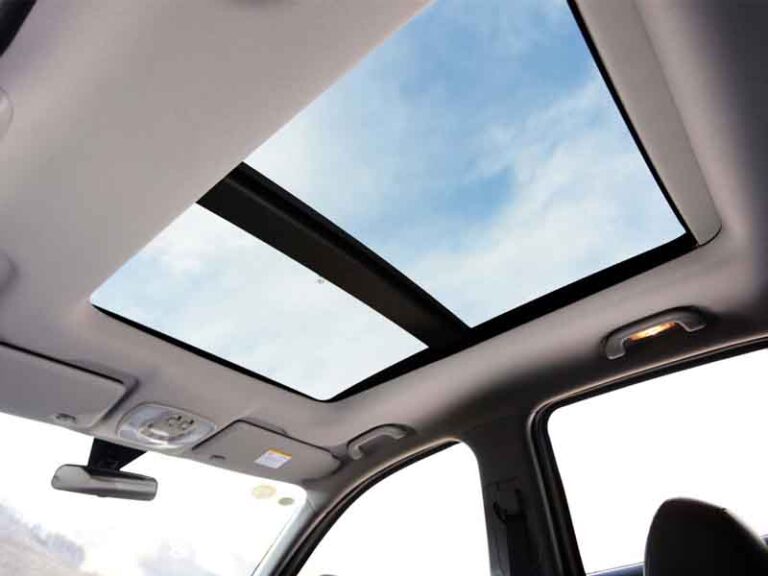
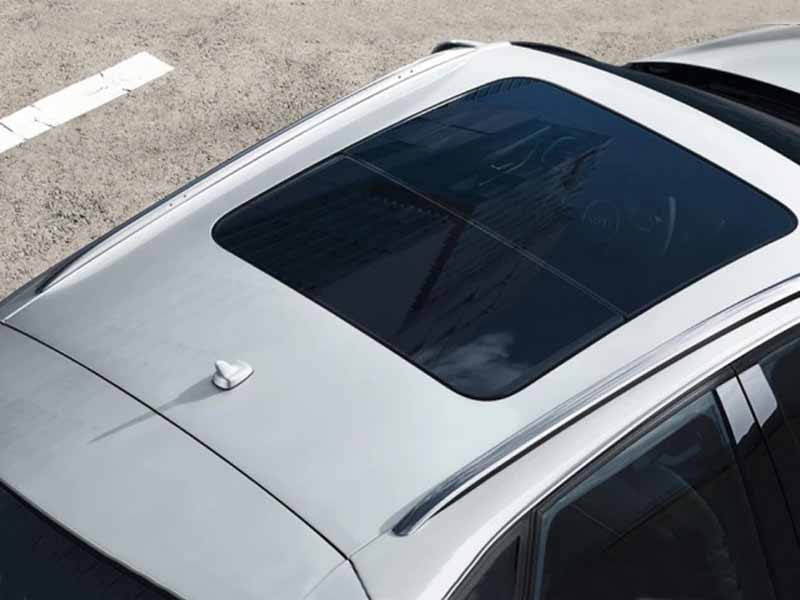
Nowadays, automobile sunroofs are no longer the exclusive configuration of high-end models, and many family cars are also equipped with this configuration, which brings broad vision and a transparent experience to drivers and passengers.
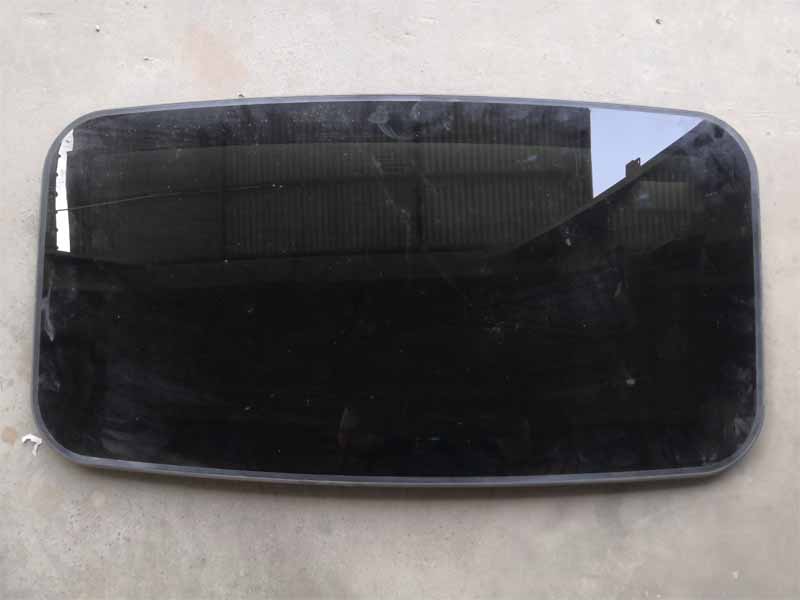
But few people pay attention to the fact that the cost of a seemingly ordinary sunroof glass is often several times that of ordinary window glass.
- Special glass material used in automobile sunroofs and its manufacturing technology
- Process accuracy: the perfect fit of the sunroof glass in millimeter level
- Integrated function: the technical aggregate behind the glass
- Safety standard: higher than the strict requirements of ordinary glass.
- After-sales maintenance: the chain reaction of the niche market
The high price of sunroof glass is essentially a comprehensive embodiment of technology, safety, and function. From the selection of special materials to millimeter-level process accuracy, from integrated functional design to strict safety standards, a lot of costs have been poured into every link.
Special glass material used in automobile sunroofs and its manufacturing technology
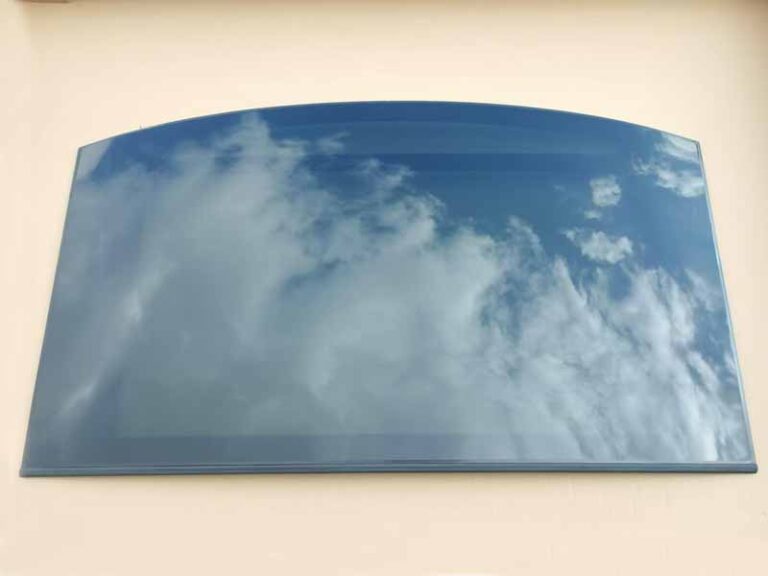
Ordinary car windshields mostly use laminated glass, while the material requirements of sunroof glass are much stricter. The mainstream sunroof glass generally uses strengthened glass or laminated tempered glass.
The former improves the impact resistance through physical quenching, while the latter implants PVB film between the two layers of glass, which will stick to mesh fragments even if it is broken to avoid splashing and hurting people.
The production process of this kind of special glass is complicated: the raw material needs to choose the original glass with low iron and high permeability to reduce visual distortion; In the production process, there are many processes such as high-temperature tempering, precise cutting, and edge grinding, and each step needs to strictly control parameters.
The particularity of the material is one of the core reasons why the cost of sunroof glass is higher than that of ordinary window glass.
Process accuracy: the perfect fit of the sunroof glass in millimeter level
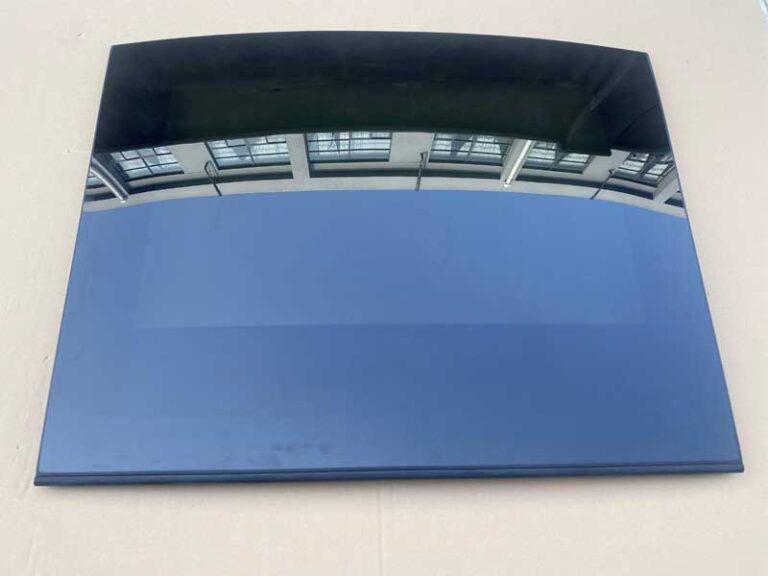
Sunroof glass is not a simple plane glass, and the sunroofs of most models have a certain radius, which needs to be sewn with the curved surface of the roof. This requires the glass to accurately match the body data in the molding stage, and the error should be controlled within 0.5 mm, it will lead to air leakage, water leakage or abnormal sound.
In order to achieve this accuracy, manufacturers need to obtain the roof model through 3D scanning first, and then customize a special mold for hot bending. The sunroof of some high-end models also has the function of gradient privacy glass.
By implanting dimming particles in the glass, the transparency can be adjusted continuously, which will increase the cost a lot. In addition, the edge treatment of sunroof glass is far stricter than that of ordinary glass, and it needs polishing, chamfering, and other processes to ensure the perfect fit with sealing tape.
Integrated function: the technical aggregate behind the glass
Today’s sunroof is no longer a simple piece of glass, but a system component that integrates various scientific and technological functions. Many sunroofs are equipped with electric sunshades, rainfall-sensing automatic closing, anti-pinch functions, and more. These functions need to arrange sensors, motors, and control modules around the glass.
Take the anti-pinch function as an example, a pressure sensor needs to be implanted in the sunroof glass to monitor the running resistance in real time, and once an obstacle is encountered, it will run in reverse immediately.
In addition, the sunroof of some high-end models also has the function of solar charging, and the photovoltaic coating on the glass surface provides power for the in-vehicle appliances.
The cost of this technology accounts for a large proportion of the total cost of the sunroof. These additional functions change the sunroof glass from a “passive component” to an “active system”, which naturally pushes up the overall cost.
Safety standard: higher than the strict requirements of ordinary glass.
As the weak link of the roof, the sunroof needs to withstand a higher safety test than ordinary glass. The global mainstream automobile safety standards have clear requirements for the impact resistance and penetration resistance of the sunroof glass.
In some areas, the sunroof is also required to have a rollover protection function to maintain structural integrity when the vehicle rolls and prevent the occupants from being thrown out.
In order to meet these standards, the sunroof glass needs to undergo a series of extreme tests: heavy steel balls fall from a specified height, and the glass cannot be broken; Under the impact of sand and gravel at high speed, there can be no cracks;
When simulating the rolling of a vehicle, the sunroof has to bear a load that exceeds the weight of the vehicle several times. These testing requirements force manufacturers to constantly upgrade their production processes, which also directly pushes up product costs.
After-sales maintenance: the chain reaction of the niche market
Compared with ordinary window glass, the market share of sunroof glass is relatively small, which leads to its high after-sales maintenance cost.
On the one hand, because the size and radian of sunroof glass are vehicle-specific, manufacturers can’t produce it on a large scale and can only customize it for a single vehicle, which pushes up the manufacturing cost;
On the other hand, the replacement of sunroof glass is much more difficult than ordinary glass, and it is necessary to disassemble the roof interior and reset the sealing strip, and the man-hour cost is also higher.
In addition, the damage rate of sunroof glass is relatively low, which leads to the slow circulation of accessories, and dealers have to bear higher inventory costs, which will eventually be passed on to consumers. On the whole, the after-sales cost of sunroof glass far exceeds that of ordinary window glass.
FAQ
Q: Why does the glass of the panoramic sunroof look transparent, but it can insulate the sun?
A: At present, most of the sunroof glasses equipped with models have a special heat-absorbing coating. At the same time, some high-end models will adopt a laminated PVB membrane structure, which can effectively block most infrared rays and ultraviolet rays, and give consideration to transparency and heat insulation, and sun protection.
Q: Will the broken sunroof glass fall off and hurt people?
A: The sunroof glass is basically tempered laminated glass. Even if it is cracked by impact, the glass fragments will be stuck by the interlayer in the middle, and the whole piece will not break and fall, thus avoiding the risk of injury to the greatest extent.
Q: How to prolong the service life of automobile sunroof?
A: Regular sunroof maintenance is the key: ① Regularly clean the sunroof guide rail to avoid dust accumulation leading to jamming; ② Check whether the sealing strip is aged or damaged; (3) dredge drainage holes regularly to prevent rainwater from flowing backwards; ④ Avoid frequent opening and closing of sunroofs on extremely bumpy roads. Preventive maintenance is far more economical than maintenance after damage.