Cost vs Quality: How to Choose the Right China Sunroof Glass Supplier Guide
In the global automobile supply chain, China’s sunroof glass supplier has already become one of the core choices for international automobile enterprises and the aftermarket by virtue of its capacity scale and cost advantages.
However, in the face of a mixed supplier market, many buyers are caught in the dilemma of “choosing low prices for fear of out-of-control quality, and choosing high-end for fear of cost exceeding the standard”. In fact, cost and quality are not absolutely opposite ends. The key lies in establishing a scientific evaluation system and finding the balance point between them.
Understand first: the cost composition and quality core of sunroof glass
To find the optimal solution between cost and quality, we must first understand the pricing logic and quality control points of suppliers. From the cost dimension, the price of a sunroof glass mainly consists of three parts: the cost of basic raw materials is the core component, in which the purity of glass raw materials and the quality grade of laminated film directly affect the pricing;
The cost of processing technology is an important difference, and the precision control of surface forming, strengthening treatment, and special coating will bring an obvious price difference. Finally, management and service costs, including quality control system construction, logistics distribution efficiency, after-sales response mechanism, and other hidden inputs.
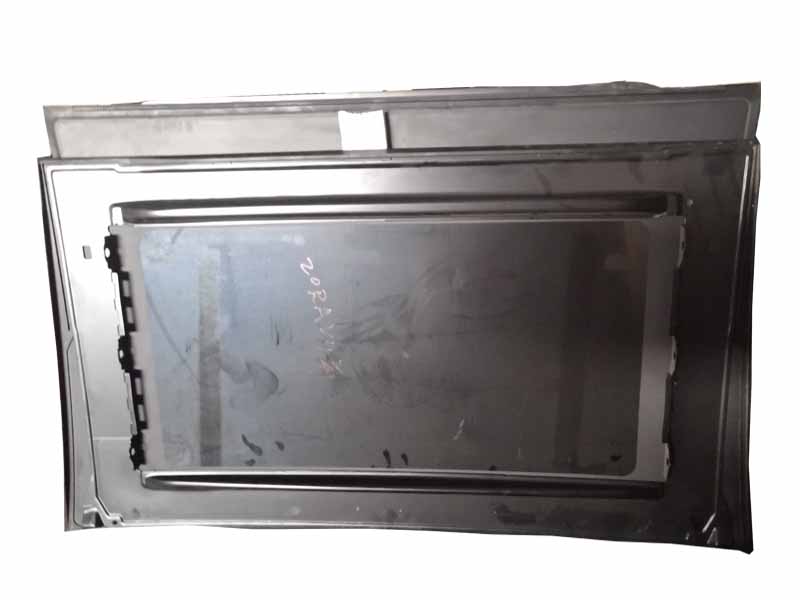
The core of quality focuses on three indicators: first, safety performance, impact resistance of glass, and adhesion of sandwich structure should meet authoritative industry standards; Second, optical performance, light transmission, heat insulation, ultraviolet blocking and other effects directly affect the driving experience; Third, durability, the precision of edge treatment and the anti-aging ability of sealing parts determine the service life of products.
Many low-priced suppliers have reduced their investment in raw material grade, process precision, and quality control, which seems to save costs, but in fact they have buried after-sales hidden dangers.
Avoid misunderstanding: don’t be misled by the single price tag of sunroof.
Buyers often fall into two extreme misunderstandings: either blindly pursuing the lowest price or only recognizing the industry’s top brands. The former often encounters a “low price trap”: many buyers have been attracted by products far below the average price of the industry, but they have frequently received customer complaints due to quality problems, which not only bear the cost of returning goods, but also lose the long-term accumulated customer trust.
The latter may cause “over-investment”: some enterprises give priority to international brand factories in China at the initial stage of procurement, and the cost is much higher than that of local quality suppliers. However, the actual test data show that the product performance of some local suppliers has reached or even exceeded international standards, but there are differences in brand premium.
The correct thinking should be: take “total cost” instead of “single purchase price” as the core index, and comprehensively calculate the long-term costs of procurement, logistics, after-sales and replacement frequency. For example, a sunroof glass with a moderate price, although the single purchase price is slightly higher, has a longer service life and fewer after-sales problems, and the comprehensive cost is lower in the long run.
Practical guide: four-step selection of cost-effective suppliers
The first step is to look at the qualification threshold. Suppliers are required to provide the exclusive quality system certification of the automobile industry, the national compulsory safety certification, and the source certificate of core raw materials.
This is the basis for entering the pool of qualified suppliers, so as to avoid the subsequent compliance risks caused by unqualified qualifications. The second step is to inspect the production links on the spot.
Focus on three core areas: raw material warehouse to see whether there is a formal brand raw material logo, production workshop to see the degree of application of automation equipment, the higher the degree of automation, the stronger the process stability; Quality control workshop to see if there is a perfect online testing process.

Many local enterprises have greatly improved the stability of product quality by introducing advanced production equipment, but have also attracted more high-end customers. Step 3, ask for a third-party test report. Don’t trust the supplier’s self-promotion; ask for a performance test report issued by an authoritative organization, focusing on the comparison of three core indicators: impact strength, heat insulation rate, and ultraviolet blocking rate.
At the same time, you can ask for samples and conduct simple tests by yourself. For example, if you hit the edge of the glass with a hard object, high-quality tempered glass will appear uniform granular fragmentation, while inferior products may appear irregular massive fragmentation.
The fourth step is to evaluate the service capacity. Ask the supplier about order flexibility, delivery cycle, after-sales response time, and whether to provide customized services. For small and medium-sized buyers, suppliers who can flexibly adjust the order quantity are more suitable; For the main engine factory, a perfect after-sales system and quick response ability are particularly important.
FAQ
Q: When evaluating suppliers of sunroof glass, what should we look at besides the product itself?
A: We should also pay attention to service capabilities, including order flexibility, delivery cycle, after-sales response time, and whether to support customized requirements.
.
Q: What are the possible hidden dangers of low-priced sunroof glass?
Answer: It is possible to reduce investment in raw material purity, process precision, and quality control, resulting in insufficient safety performance and poor durability, and subsequent problems, such as water leakage and fragmentation, are easy to occur.
Q: Is the sunroof leaking a common problem? How to avoid it?
Answer: The water leakage of the sunroof is usually caused by the blockage of the drain pipe or the aging of the sealing strip, not a quality problem of the sunroof itself. It is recommended to clean the sunroof guide rail and drain hole regularly (once every six months) and check whether the sealing strip is aging and cracked. In the procurement process, choose suppliers with IATF 16949 certification, and their products are more secure in waterproof testing and durability.