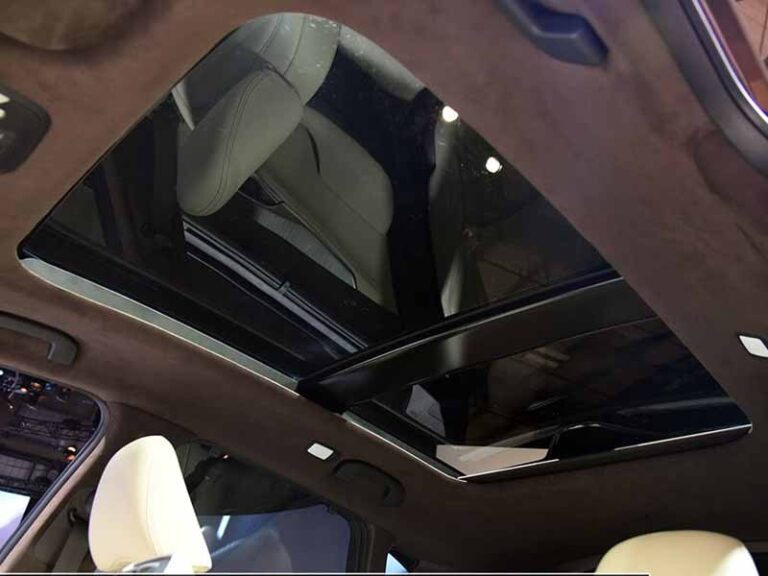
How does an Auto Sunroof Glass Factory in China Ensure Quality and Safety Standards?
In the complex supply chain system of the global automobile sunroof industry, the auto sunroof glass factory in China is undergoing profound transformation and upgrading from the traditional “manufacturing base” to the international “exporter of core technical standards”. For OEM procurement and engineers, it is far more important and valuable to know how such factories systematically construct and continuously improve their product quality control and safety compliance systems than simply browsing product parameter manuals or supplier catalogues.
Strict raw material screening and supply chain management
High-quality sunroof glass is not ordinary flat glass, but a specially treated composite structure.
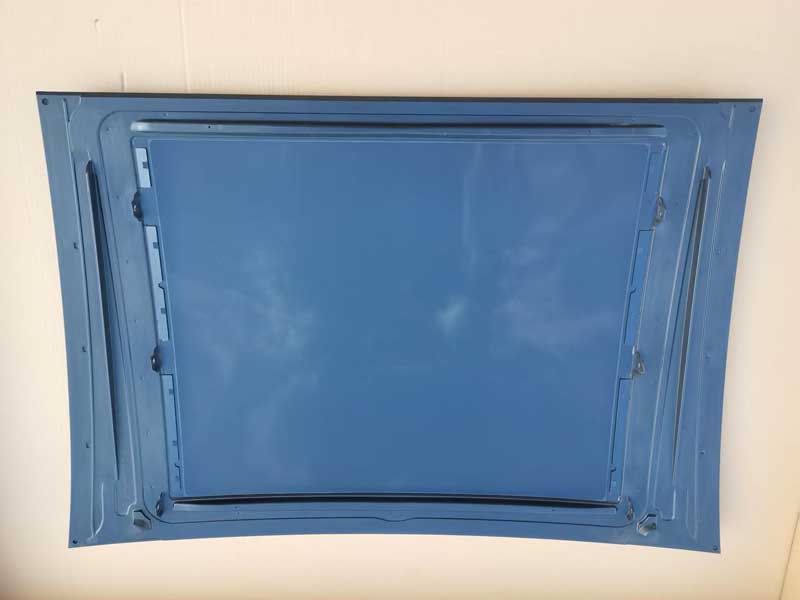
First of all, the original glass must pass the detection of defects such as light transmittance, haze, bubbles, and stones. Any tiny impurities may cause stress concentration in the subsequent hot bending or tempering process, leading to the risk of cracking. Secondly, the choice of PVB film or SGP film in the middle layer is very important-they determine whether the glass can maintain integrity after breaking and prevent the fragments from splashing and hurting people. The factory will test the peeling strength and aging resistance of each roll of film to ensure that it can still be firmly bonded at extreme temperatures.
In addition, accessories such as a metal frame, a sealing rubber strip, and a guide rail slider should also be included in the whole chain traceability system. Each batch of incoming materials has a unique code, which records the supplier, batch number, and test report, and can be quickly located and recalled in case of abnormality. This control mode of “from source to finished product” is one of the core competitiveness of China’s high-end sunroof glass factory.
Precise hot bending and tempering process control
Sunroof glass is mostly curved or shaped, which requires the factory to have high-precision hot-bending forming ability. In the heating furnace, the glass is uniformly heated to near the softening point (about 600℃-650℃), and then attached to the preset curved surface by self-weight or die pressure. The difficulty of this process lies in the uniformity of temperature field distribution-if it is overheated locally, the glass will deform or even melt; If the temperature is insufficient, the required radian cannot be achieved.
Therefore, modern factories generally adopt multi-zone electric heating furnaces with independent temperature control, and with the real-time feedback of an infrared temperature measurement array, the temperature difference is controlled within 2℃. At the same time, the design of the mold is as critical as the regular calibration: the surface of the mold must be smooth and flawless, and the expansion coefficient must match the glass, it will cause irreversible warping in the cooling stage.
Tempering is the sole process to give glass strength. After the glass is quenched by cold air, a compressive stress layer is formed on the surface, and the impact resistance can be improved by 4-5 times. However, tempering must be precise: if the wind pressure is too small, the strength is insufficient, and if it is too large, the glass may “self-explode”. Experienced factories will adjust the grid spacing and wind speed curve according to the thickness, color, and curvature of glass, and verify the tempering effect through the falling ball test and debris counting. According to the national standard, the number of fragments in the 50×50mm area should be no less than 40, and the internal control standard of the head factory is often higher to ensure that each piece of sunroof can resist accidental impact, such as hail and gravel.
Multi-dimensional performance testing and durability verification
The finished product needs to go through a set of test matrices to simulate the real working conditions before leaving the factory.

Optical performance testing is the first step: using a spectrophotometer to measure visible light transmittance, ultraviolet blocking ratio, and total solar energy transmittance. For example, an insulated sunroof requires a transmittance of ≥70% and an ultraviolet blocking rate of over 99%. Any products with excessive chromatic aberration or glare will be rejected.
Mechanical strength test includes static pressure test and dynamic impact test. The factory will use a hydraulic press to apply increasing pressure to the glass until it breaks, and record the damage load. At the same time, simulate the scene of a pedestrian head collision or a passenger collision in the car, and check whether the glass still adheres to the frame after breaking, rather than falling off and hurting people.
Environmental reliability test is the most important thing: in the high and low temperature circulation box, the glass is repeatedly switched between -40℃ and +110℃ for hundreds of times to observe whether there is degumming, blistering or cracking; Salt water is sprayed continuously in the salt spray test box to verify the corrosion resistance of the metal frame; Continuous irradiation in ultraviolet aging box for thousands of hours ensures that PVB film will not become yellow and brittle. Only by passing these extreme tests can the product obtain the factory license.
FAQ
Q: What’s the difference between sunroof glass and ordinary window glass?
A: Sunroofs are mostly laminated glass, with PVB film in the middle, so that the fragments will not splash after being broken; Ordinary windows are generally a single piece of tempered glass, which will break into small pieces after being broken. Sunroofs also need to meet the requirements of heat insulation and temperature difference resistance.
Q: Can sunroof glass really protect against the sun?
A: Yes. By coating the glass surface or adding ultraviolet absorbent in the middle layer, the factory can achieve an ultraviolet blocking rate of over 99%. Before leaving the factory, instruments will be used for sampling inspection to ensure that the thermal insulation performance is up to standard.
Q: Is the sunroof leaking or abnormal sound a quality problem?
A: Not necessarily. Leakage is mostly caused by blockage of drainage pipes or aging of sealing strips; Abnormal sound is often caused by a lack of oil in the guide rail or loose screws. Regular cleaning and maintenance are enough.