How to Vet a Reliable OEM Sunroof Glass Supplier in China?
The ultimate goal of screening the OEM Sunroof Glass Supplier in China is not to complete a transaction, but to build a supply chain system with resilience and synergy. After passing the qualification examination and on-site evaluation, it is equally important to comprehensively evaluate the long-term cooperation potential of suppliers.
The evaluation dimensions can include: the supplier’s productivity, flexibility, and delivery punctuality, the response speed and closed-loop processing ability of quality customer complaints, and the willingness and ability of technical collaboration in the process of new product development. A supplier worthy of long-term cooperation usually shows the characteristics of “actively solving problems”-for example, when the sunroof is abnormal in the vehicle durability road test, he can actively participate in the cause analysis and put forward technical suggestions from multiple dimensions, such as glass profile tolerance, sealing strip matching and installation technology, instead of passively waiting for the buyer’s solution.
Comprehensive strength of enterprises
First of all, we must conduct a comprehensive and in-depth verification of the core qualifications of suppliers. In the evaluation stage, it is important to confirm whether the supplier has a valid official production license, which is a legal certificate to prove that they are qualified to engage in automobile sunroof glass production activities.
At the same time, it is necessary to check whether it has obtained the relevant quality management system certification, which is not only an important standard to measure whether its production process is systematic and standardized, but also a key guarantee for the stability of its product quality. In addition, for export business, it is necessary to strictly check whether it holds export compliance certification that meets the regulations and industry requirements of the target market, so as to ensure that products can smoothly enter overseas markets and meet local safety and quality standards. This series of strict qualification verification aims at screening from the source, effectively identifying and eliminating those unqualified small workshops or enterprises that may have Jerry-building, backward production technology, and are unable to guarantee product quality, thus laying a solid and reliable foundation for follow-up cooperation.
Product quality and testing
In-depth evaluation of suppliers’ comprehensive production capacity and technology research and development level. Investigate the actual scale and layout of the production workshop in detail to confirm whether it is equipped with advanced professional automatic production lines and high-precision testing equipment. At the same time, it is necessary to know the strength of its R&D team in detail and ask about its customized development ability and experience accumulation for different models and products with different specifications, so as to ensure that the supplier has sufficient technical reserves and output elasticity, and can stably and efficiently meet the specific order quantity and diversified product specifications and quality requirements.
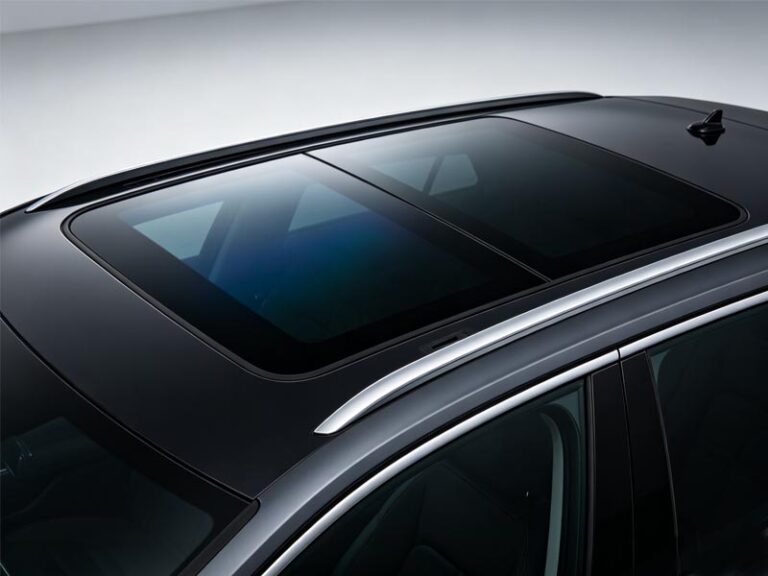
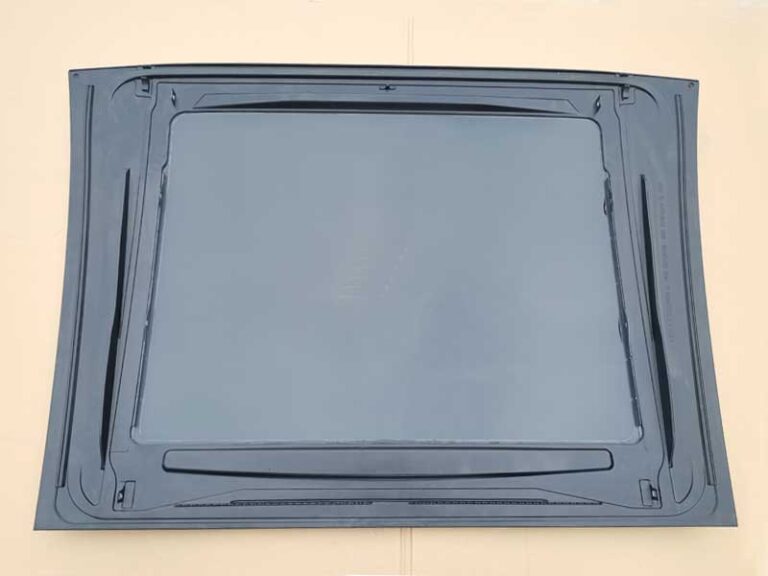
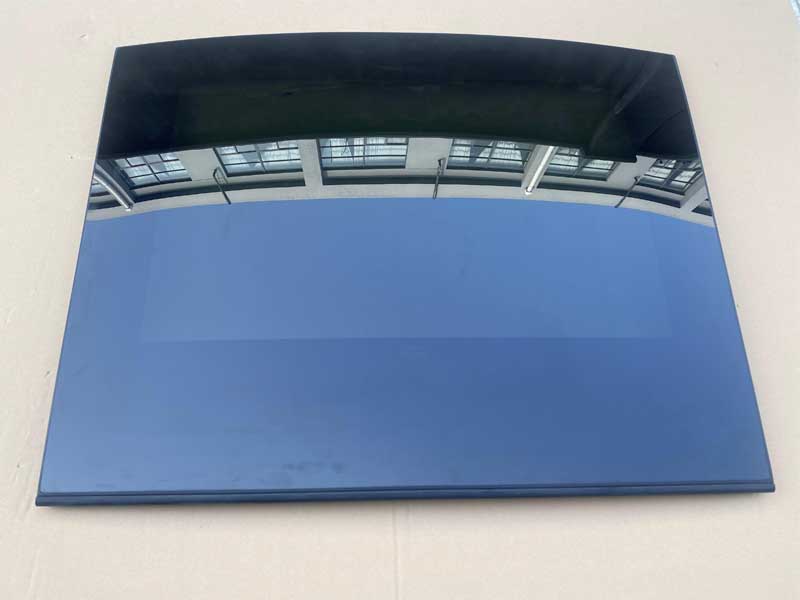
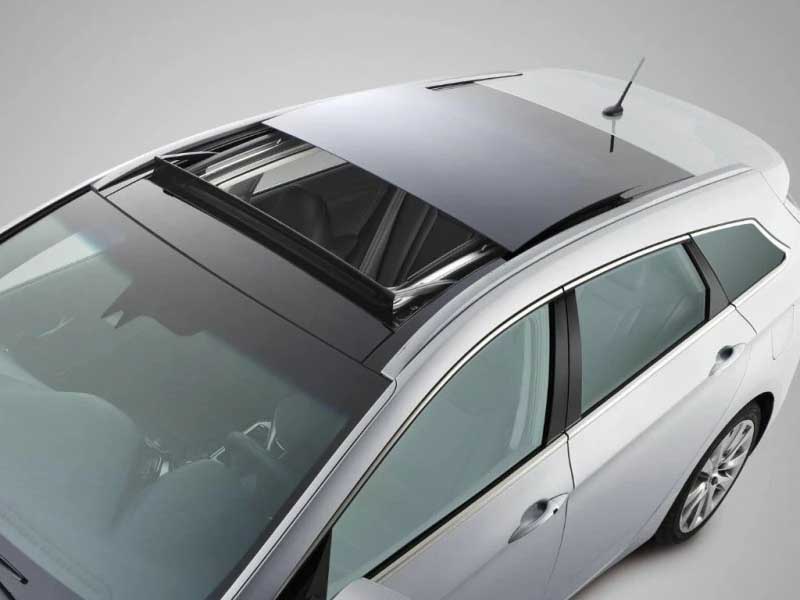
Core standard: product quality is the core. The automobile sunroof glass should be made of high-strength and corrosion-resistant high-quality materials and have exquisite manufacturing technology to ensure the durability, sealing, and waterproofing of the sunroof.
Professional testing: Reliable manufacturers will provide detailed product parameters and testing reports. The factory should be equipped with professional instruments such as a spectrum analyzer and stress detector to strictly test the performance of glass before leaving the factory.
If conditions permit, it is suggested that you give priority to on-the-spot investigation, or consider entrusting an independent and professional third-party organization to conduct on-site audit. Through in-depth on-site visits, you will be able to personally observe the actual operation of its production workshop, intuitively evaluate the specific arrangement and connection efficiency of its production process, directly test the daily operation of its quality control system in the production site, and at the same time, learn its real factory environment and daily management level. This direct and face-to-face verification method helps you to obtain first-hand, detailed, and reliable information, thus effectively making up for and avoiding the risk of incomplete, asymmetric, or even distorted information that may be caused by relying solely on online communication and document exchange.
After-sales service and installation
Comprehensively and deeply investigate the integrity and reliability of its after-sales support system to ensure that the system can show full flexibility and effectiveness in dealing with various complex situations. The specific handling rules for defective products must be clearly defined, including but not limited to product quality inspection standards, problem confirmation procedures, exchange and replacement operation specifications, and response standards for maintenance services.
At the same time, the response speed of supply problems should be quantitatively evaluated, not only to examine its emergency plan for sudden supply interruption, but also to evaluate its stable performance ability in the regular replenishment cycle. In addition, it is necessary to know the detailed rules of after-sales compensation clauses in detail, clarify the compensation scope, calculation method, implementation process, and dispute resolution mechanism, and ensure that all clauses are reasonable and enforceable. Through the above multi-dimensional careful evaluation, we can effectively prevent and reduce all kinds of potential operational risks in the long-term cooperation process, such as supply chain interruption, product quality disputes, and customer service lag, so as to provide a solid guarantee for business continuity and stability, and finally realize the healthy, efficient, and lasting operation of the cooperative relationship.
FAQ
Q: When selecting suppliers of sunroof glass, what is the core concern of product quality inspection?
A: The core needs to pay attention to the consistency of the production process of the original glass and the compliance with the national mandatory safety standards, confirm that the supplier can provide a complete factory inspection report, and at the same time check the product qualification and vehicle type adaptation parameters to avoid the problems of mixed supply of glass from non-original factories and substandard dimensional accuracy that affect the loading and use.
Q: What is the processing flow if the product is found to have quality defects after arrival?
A: It needs to be confirmed with the supplier in advance. After problems are found in the arrival acceptance, they can provide feedback on the problems and provide defect certificates as soon as possible. The supplier needs to complete the problem verification within the agreed time limit and complete the return or replenishment according to the agreed rules to ensure that the downstream production or installation progress will not be affected.
Q: What are the key inspection indicators that the original sunroof glass generally needs to pay attention to?
A: First of all, we must look at the optical performance, and there must be no obvious defects such as ripples, bubbles, and stones that affect the driving sight; Secondly, safety performance. To meet the requirements of impact resistance and fragmentation state of tempered glass, the sunroof glass also needs to check the curvature and dimensional deviation to ensure its adaptation to the vehicle model. In addition, the sunroof with coating and sensing functions needs to be additionally tested for the effectiveness of the corresponding functions.