OEM vs Aftermarket Sunroof Suppliers: What’s the Difference?
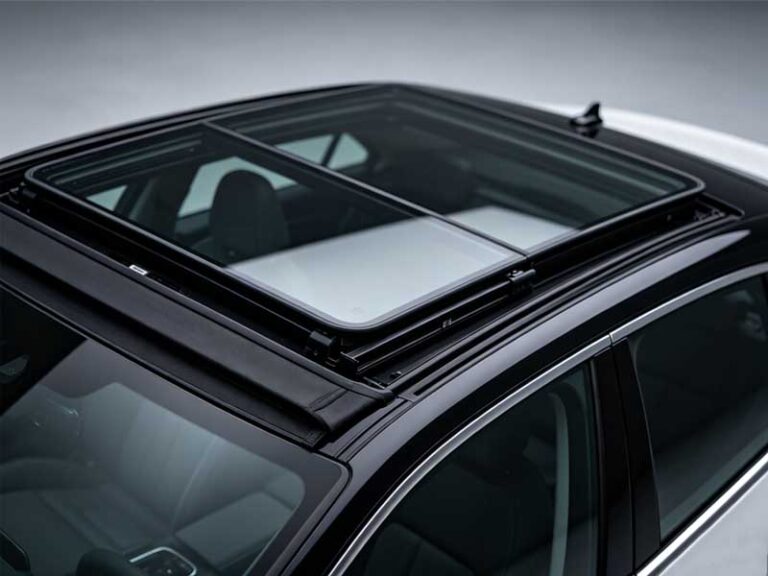
As a factory with its own production line and adhering to high standards, Houming Sunroof knows the decisive role of supply chain selection in product quality. In the field of automobile sunroofs, the difference between OEM and aftermarket sunroof suppliers directly affects product adaptability, durability, and user experience.
- Quality Assurance and Accurate Matching: Original Factory Advantage of OEM sunroofs
- Economical flexibility and wide choice: the "diversified" advantage of sunroof in the after-sales market
- Professional service and technical support: the "service power" advantage of OEM and Aftermarket sunroof suppliers
- Supply chain service and business value: consideration of long-term cooperation between sunroof buyers
OEM sunroof supplier, as its name implies, refers to the manufacturer that provides original supporting sunroofs for automobile main engine plants (such as Toyota, Volkswagen, BMW, etc.).
After-market sunroof suppliers refer to third-party manufacturers whose sunroofs are not the matching parts of the original car when they leave the factory, but for the aftermarket market of maintenance, replacement, and personalized modification.
Quality Assurance and Accurate Matching: Original Factory Advantage of OEM sunroofs
OEM sunroof is a synchronous design component in the vehicle research and development stage, and suppliers participate in the early development process to obtain accurate body data.
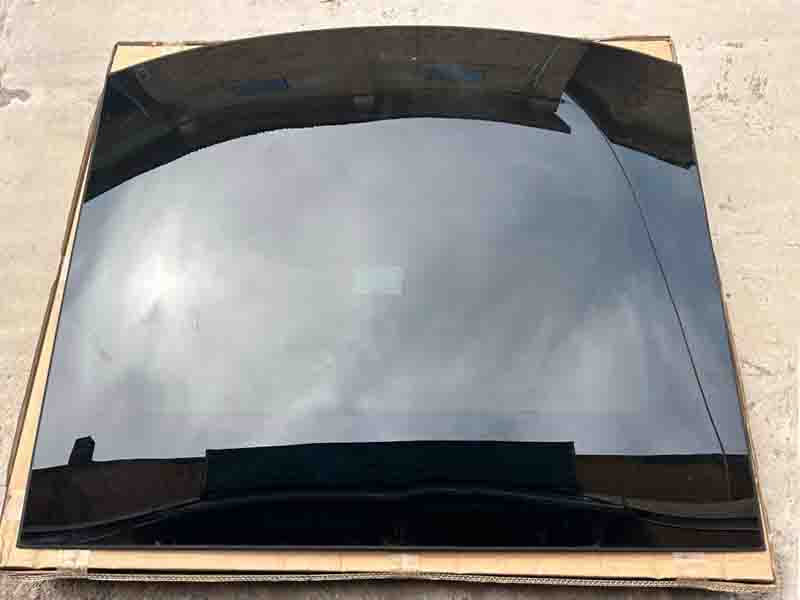
For example, the panoramic sunroof of the Tesla Model Y adopts three-dimensional laser scanning technology, and the fitting degree with the curved surface of the car body reaches 99.8%, and the installation hole position error is controlled within 0.05mm to ensure perfect matching with the vehicle sealing system and drainage structure.
The most outstanding advantage of OEM sunroofs lies in their precise adaptability. OEM sunroofs are manufactured according to the exact specifications of automobile manufacturers, including the same thickness, curvature, glass coloring, ultraviolet coating, and installation point accuracy.
When buyers buy OEM sunroofs, they get a replacement that is essentially the same as when they leave the factory. This precise matching is very important for the sunroof because the sunroof panel needs to fit perfectly with the sealing strip to ensure the best sound insulation and sealing performance. In addition, OEM sunroof suppliers usually provide warranty services from manufacturers or authorized distributors to provide users with additional peace of mind.
Economical flexibility and wide choice: the “diversified” advantage of sunroof in the after-sales market
First of all, the aftermarket sunroof has obvious advantages in price. For car owners or repair shops with a limited budget, the performance of a certified brand aftermarket sunroof is close to OEM, and the price is more reasonable, so that more people can get a high-quality sunroof replacement or upgrade scheme at a lower cost.
Secondly, the sunroof in the aftermarket provides rich customization. Buyers can choose functions, materials, or designs that OEM may not provide-such as a larger panoramic sunroof, electrochromic smart glass, personalized appearance painting, etc. This flexibility allows car owners to create a unique driving experience according to their own preferences and needs.
In addition, aftermarket sunroofs are more widely available and can be easily purchased through independent repair shops, auto parts suppliers, or online platforms, making the procurement process more convenient and efficient.
Professional service and technical support: the “service power” advantage of OEM and Aftermarket sunroof suppliers
OEM sunroof suppliers have profound system advantages in service. Due to long-term cooperation with automobile manufacturers, OEM suppliers have accumulated rich vehicle data and installation experience and can provide standardized technical training, professional installation guidance, and factory-level after-sales support for authorized maintenance networks.
Choosing OEM sunroof means that you get not only a part, but a whole set of service systems endorsed by the OEM.
After-sales sunroof suppliers have unique advantages in service flexibility and response speed. Many aftermarket suppliers focus on responding to market demand quickly and can provide replacement parts for old or niche models that may have been discontinued by the OEM.
At the same time, independent repair shops and refit shops are often more familiar with after-sales products and can provide personalized installation schemes and more flexible after-sales services. For users who pursue fast delivery and personalized service, the response speed of after-sales market channels is often more competitive.

Supply chain service and business value: consideration of long-term cooperation between sunroof buyers
From the buyer’s point of view, OEM sunroofs and aftermarket sunroof have their own advantages, and there is no absolute “better”, only “more suitable”. Here are some suggestions for scenario selection:
Select the recommended scenario of OEM sunroof.
To serve the high-end brand 4S shop or authorized maintenance network, it is necessary to maintain the original accessories standards.
Customer groups have clear requirements for the quality of the original factory, and the budget is sufficient.
I hope to be deeply bound with the OEM authorization system and obtain a stable supply chain and technical support.
Pay more attention to the certainty experience of “once installed, long-term worry-free” and reduce after-sales disputes.
Select the recommended scene of the sunroof in the aftermarket.
To operate independent repair shops or an auto parts wholesale business, it is necessary to control the procurement cost.
The customer base covers a variety of models and needs a flexible product mix and rich choice space.
I hope to provide customers with personalized modification solutions and increase the functions that the OEM does not provide.
Pursue faster supply chain response speed and more flexible procurement channels
FAQ
Q: What is the difference in quality between an OEM sunroof and an ordinary after-sales sunroof?
Answer: The OEM sunroof is an accessory certified by the OEM and designed and produced for the original model. It matches the original assembly requirements, from the mold precision to the material standard, and meets the factory standards of the OEM in terms of sealing, structural strength, and adaptability; its consistency and stability are more guaranteed.
Q: Can I enjoy the original warranty when replacing the OEM sunroof?
Answer: If you replace the qualified OEM sunroof in the service channel authorized by the OEM, you can generally enjoy the warranty policy of the corresponding original parts and can also be included in the official after-sales system guarantee of the brand.
Q: Can OEM sunroofs be adapted to all old models?
A: Most of the models on sale and discontinued models within a certain period of time can obtain the OEM sunroof corresponding to the OE number through the regular OEM supply channel. Some old models with a long period of time may stop being supplied by the original factory. For details, please check the OEM parts catalog for confirmation.