Sunroof vs Panoramic Sunroof: Which One Is Right for Your Drive?
In the decision-making of automobile consumption, the choice of automobile sunroof is often regarded as the key detail that affects the driving experience. Although the traditional Sunroof and Panoramic Roof are both roof lighting and ventilation systems, there are significant differences in design logic, functional value, and usage scenarios.
Houming Sunroof will systematically compare the core characteristics of the two types of sunroofs from the aspects of space experience, efficiency comparison, and scene adaptation, so as to provide consumers with a rational decision-making basis.
Space experience and visual field value: sunroof glass from “local ventilation” to “global transparency”
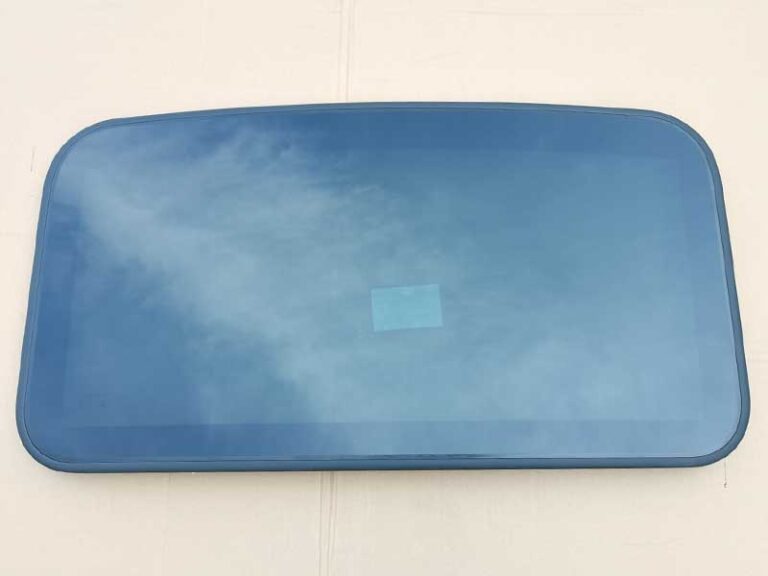
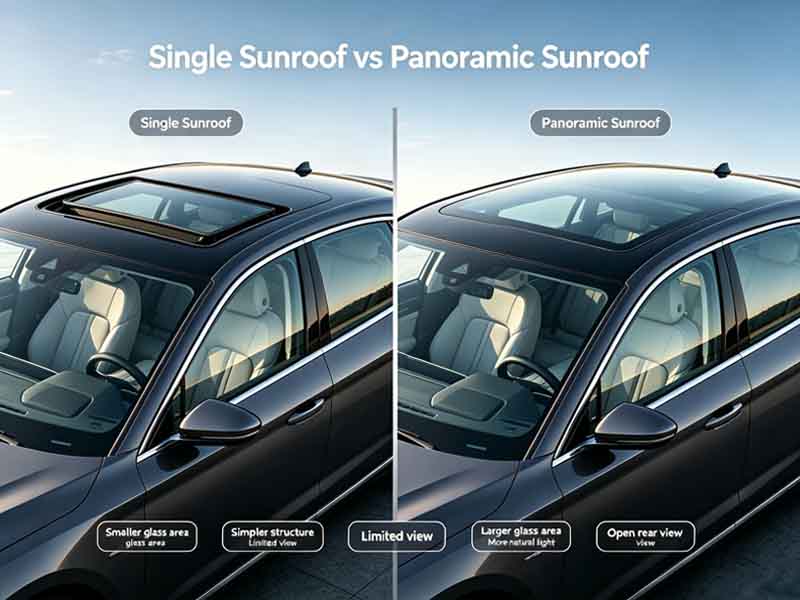
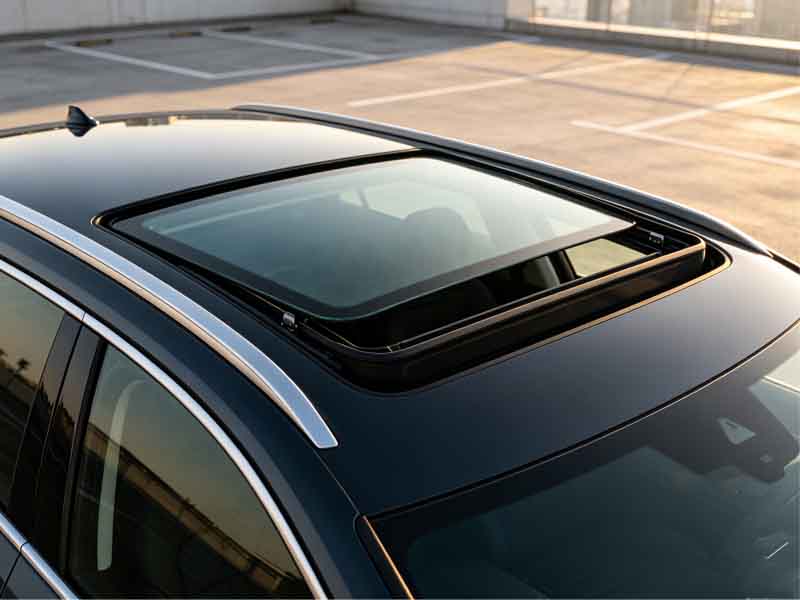
The traditional sunroof usually adopts a single glass structure, covering the roof area of about 0.5-0.8 square meters, and the opening mode is mainly to slide backwards or tilt upwards.
The core of its design is to meet the ventilation needs of the interior foundation and quickly improve the air quality inside the vehicle through air convection. The improvement of spatial vision is limited to the front row area, and the lighting experience of the rear passengers has not changed significantly.
This type of sunroof shows high compactness in structural design, and the overall size and occupied space have been carefully optimized. Therefore, when the original load-bearing frame at the top of the vehicle is reconstructed, the structural change amplitude is relatively small, which will not significantly affect the overall rigidity and safety of the vehicle body.
This design feature enables it to better adapt to the spatial layout of compact or medium-sized cars, which not only meets the functional requirements of lighting and ventilation in the car but also takes into account the stability of the roof structure and the aesthetics of the whole car.
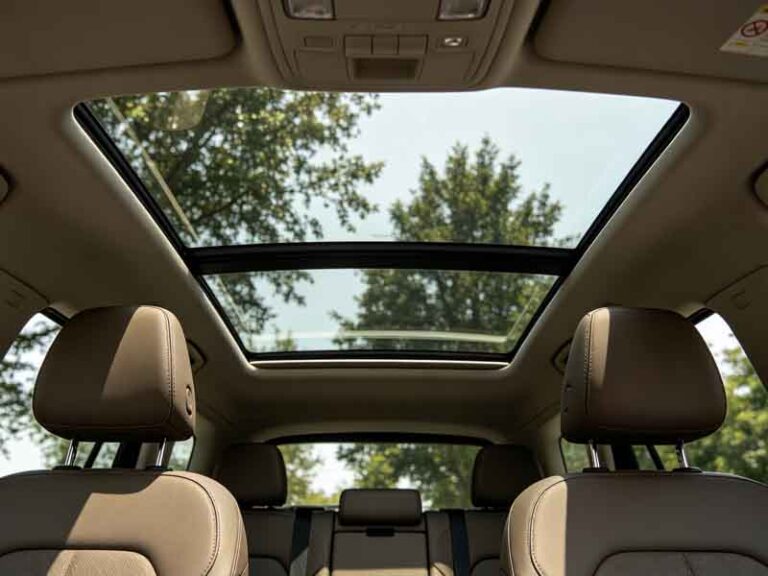
Panoramic sunroof is designed by splicing multiple pieces of glass, covering the roof area of 1.2-1.8 square meters, and some luxury models even achieve more than 90% roof coverage.
The core logic of the design concept of the panoramic sunroof has undergone a fundamental transformation from simply meeting “functional requirements” to fully pursuing “experience upgrade”.
This change is reflected in the fact that it is no longer just a simple configuration item of the vehicle, but by greatly expanding the lighting area of the roof, natural light is introduced into the cockpit, thus creating a transparent, open, and layered interior space atmosphere.
No matter whether the driver and co-driver are in the front row or the passenger is sitting in the back row, they can get a complete and coherent view of the sky without shelter, which makes the whole driving process have a closer sensory connection with the external environment.
In addition, some models adopt a segmented panoramic sunroof design, which supports the independent opening of the front and rear parts, which further takes into account the flexibility and practicality of the ventilation function while retaining a wide field of vision.
In the long-distance driving scene, this independently operable opening and closing mechanism can effectively introduce fresh air and adjust the air flow in the car, thus significantly alleviating the depression of passengers due to long-term closed space and improving the overall ride comfort and pleasant experience.
Comparison between functional practicability and ventilation efficiency of automobile sunroof
In terms of functional positioning, the common sunroof takes ventilation as its core mission. Its working principle is to use the negative pressure area formed on the roof of the vehicle when it is running to extract hot air and turbid air from the vehicle, so as to realize efficient ventilation.
Compared with side window ventilation, sunroof ventilation has lower wind noise and air resistance when driving at high speed, and its fuel economy performance is better. In addition, the mechanical structure of ordinary sunroofs has been verified by the market for decades, with a low failure rate and relatively simple maintenance requirements.
The function of a panoramic sunroof is more diverse, but the actual performance varies with specific types. The front section of an openable panoramic sunroof usually supports two modes: upturning and sliding, which can achieve the same ventilation effect as an ordinary sunroof to a certain extent.
However, the front section of the panoramic sunroof of some models only supports upturning, which can not be completely slid open, and the actual ventilation efficiency is greatly reduced. The fully enclosed panoramic canopy has no ventilation function at all, and its original design intention is purely to serve the lighting and visual experience.
In particular, the sunshade system equipped with a panoramic sunroof is also one of the key factors that determine its daily practicality and user experience. Different from the traditional sunroof, which only needs simple covering, the panoramic sunroof has more stringent requirements on the performance of the sunshade because of its larger area.
At present, the common electric sunshade on the market, although it has the convenience of one-button opening and closing and a sense of technology, can significantly improve the convenience of use, but from the perspective of thermal insulation effect, its actual performance is often inferior to that of the traditional hard sunshade.
This difference is particularly prominent in the high-temperature environment in summer: when the direct sunlight is strong and the temperature continues to rise, even if the electric sunshade is completely closed, its thermal insulation ability is still not enough to effectively block the conduction of heat into the cabin.
Therefore, the temperature inside the car may still be significantly higher than that of those models equipped with ordinary size sunroof or a full hardtop design. In this way, it will not only aggravate the load of air conditioning system, and then increase the consumption of fuel or electric energy,
Directly affect the comfort of drivers and passengers, and may even force passengers to take additional measures such as manual adjustment and temporary covering to alleviate the high temperature discomfort, thus weakening the broad vision and pleasant experience that panoramic sunroofs should bring.
Scene adaptation and decision logic of automobile sunroof
Combined with the above analysis, consumers can make choices according to their own usage scenarios and core needs:
If urban commuting is the main way and the economy of car purchase and maintenance costs is emphasized, the traditional sunroof is the best choice with the best cost performance, and its basic function can fully meet the daily ventilation needs.
If family trips or long-distance trips are often carried out, and attention is paid to the space atmosphere and ride experience inside the car, a panoramic sunroof can significantly improve driving happiness, especially for families with elderly people and children.
If you live in a hot and rainy area, or if the vehicle is parked in the open air for a long time, the thermal radiation accumulation of the traditional sunroof is less, the maintenance pressure of the sealing system is lower, and the use reliability is higher.
If the luxury and technological attributes of the vehicle are pursued and the budget is sufficient, the panoramic sunroof can be used as the core configuration to upgrade the vehicle grade, especially suitable for business use or high-end models.
FAQ
Q: Do vehicles equipped with a panoramic sunroof have to choose a sunshade?
A: For vehicles parked in the open air for a long time in high-temperature areas in summer, a high-quality sunshade can alleviate the problem of excessive temperature rise in the car to a certain extent. If the requirements for car comfort in summer are high, it is recommended to choose a panoramic sunroof model equipped with a sunshade.
Q: Is the panoramic sunroof more prone to water leakage?
A: Under normal circumstances, the probability of water leakage of qualified panoramic sunroof products is not much different from that of traditional sunroofs. As long as the drainage holes are cleaned regularly and the sealing strips are maintained according to the maintenance requirements, the water leakage problem can be effectively avoided.
Q: Will the panoramic sunroof affect the structural safety of the car body?
A: In the design and development stage, the panoramic sunroof models of regular car companies will strengthen the body structure, which meets the national safety collision standards. Normal use will not affect the safety of the body structure.