UV Protection and Acoustic Features of Sunroof Glass
As an indispensable functional component in vehicle structure, sunroof glass is not only the core component of the automobile sunroof system, but also its performance directly determines the overall quality of the interior environment.
The key to the design of this kind of glass lies in the fact that it must give consideration to the effective blocking of ultraviolet rays and the reduction of external noise on the premise of ensuring high transmittance. These two aspects are indispensable and jointly affect the comfort and safety during driving.
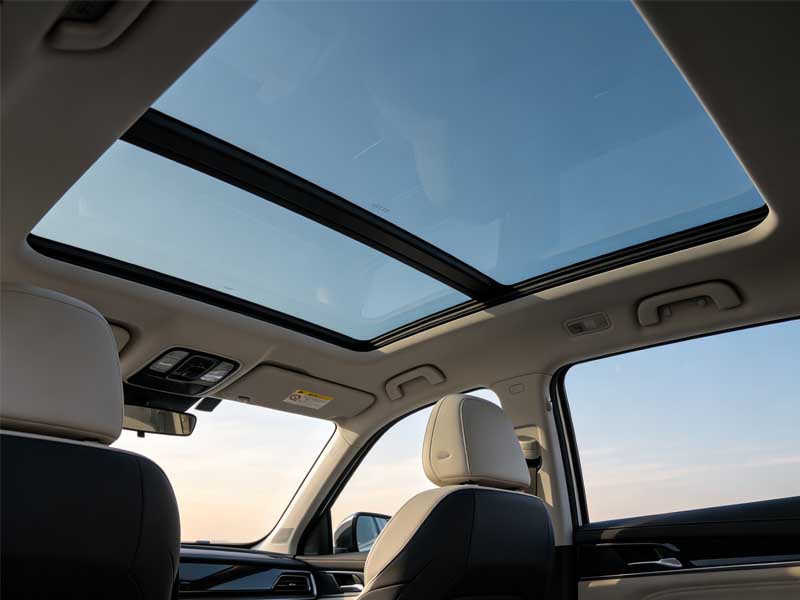
On the one hand, sufficient light transmission provides bright vision and natural light atmosphere for the car and enhances the sense of openness of the space; On the other hand, efficient ultraviolet protection can avoid the potential damage of direct sunlight to passengers’ skin and interior materials, while good sound insulation and noise reduction characteristics can help to isolate wind noise, road noise and environmental noise during driving and create a quieter and more comfortable interior environment.
Therefore, on the whole, the comprehensive performance of sunroof glass plays a crucial and decisive role in ensuring the long-term comfortable experience of drivers and passengers.
In terms of effective defense against ultraviolet damage, the protective effect of single-layer transparent glass commonly used is very limited, and only a small part of ultraviolet components can be filtered and blocked. In fact, most of the UVA and UVB ultraviolet rays that threaten skin health can easily penetrate the conventional glass material, thus continuously irradiating the human surface.
This direct penetration will lead to visible superficial reactions such as tanning and sunburn in a short time, and it will also bring greater hidden dangers, such as accelerating skin photoaging, increasing the risk of pigmentation, and even inducing potential health problems in the skin for a long time.
In contrast, the mainstream sunroof glass in the current market that meets the quality standards generally adopts more advanced and professional treatment technology. Most of them apply special metal or ceramic coating technology on the glass surface, or adopt a composite sandwich structure with a functional intermediate layer to significantly improve their ability to block ultraviolet rays.
The glass treated by these technologies can shield more than 99% harmful ultraviolet rays on average, and achieve an efficient protection effect.
At the same time, this kind of treatment process, after careful design, will not have a significant negative impact on the light transmittance of glass, and the visible light transmittance remains at a high level.
Therefore, this kind of sunroof can provide users with reliable ultraviolet protection and protect skin health, while still maintaining the brightness and visual transparency of the sunroof area, ensuring an excellent balance between lighting and protection.
In the consideration of the acoustic performance of vehicles, the sunroof glass, as a key component, mainly needs to deal with the interference of two noise sources: one is the wind noise generated by the interaction between the rapid air flow and the body structure when the vehicle is driving at high speed;
The second is all kinds of road noise from the external environment, such as the sound of tires rubbing against the ground and the noise of surrounding vehicles. Different structural designs of sunroof glass will bring significant differences in the sound insulation effect.
Because of the simple structure, the traditional ordinary single-layer glass has relatively limited performance in blocking intermediate frequency and low frequency noise, and it is often difficult to effectively suppress the transmission of these noises to the interior of the carriage.
In contrast, the laminated sunroof glass made of PVB (polyvinyl butyral) or other high-performance sound insulation materials can effectively attenuate and hinder the propagation path of sound waves through the elastic buffering and vibration absorption characteristics of its sandwich structure.
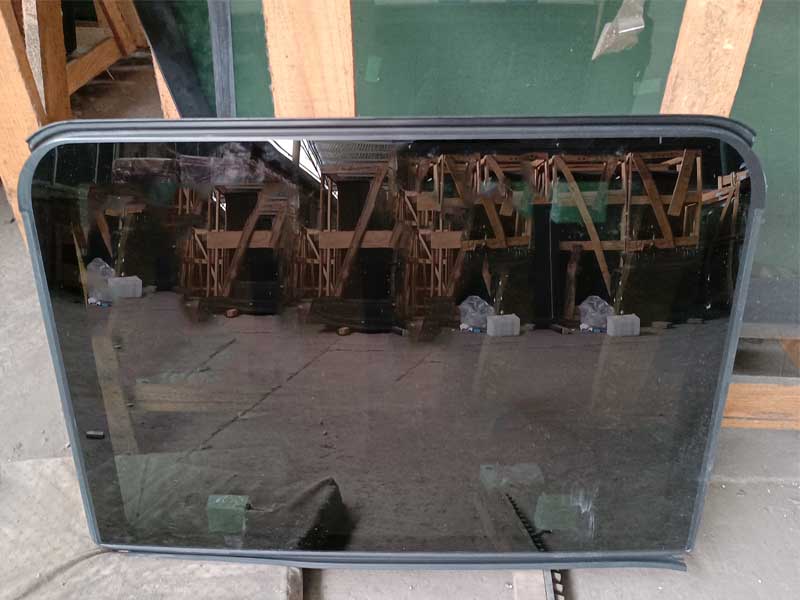
This structure can obviously weaken the penetration ability of the medium-frequency wind noise, which is sensitive to human ears, thus bringing a quieter interior environment in the hearing.
At the same time, the thickness of the glass substrate is also an important factor affecting its sound insulation performance. On the premise of considering the requirements of vehicle lightweight and structural strength, increasing the thickness of glass scientifically and reasonably can further improve the quality effect and sound wave blocking ability of materials and achieve better overall noise reduction performance.
With the increasing expectations of modern consumers for driving comfort, the requirements for a quiet environment in the car are getting higher and higher.
Therefore, the continuous optimization and improvement of sunroof glass in the two core characteristics of sound insulation and noise reduction, and structural strength, has become one of the important trends in technology research and development and product upgrading in the field of automobile parts.
FAQ
Q: Is there a big difference between ordinary sunroof glass and laminated soundproof sunroof glass in actual use?
A: The difference is obvious, especially in the scene of high-speed driving. The laminated soundproof sunroof glass can greatly reduce the wind noise and keep the car quiet. The sunroof with ordinary single glass will have obvious wind noise, which will affect the driving experience.
Q: Will increasing the thickness of the glass greatly increase the weight of the car?
Answer: compliant products will optimize the sound insulation performance while taking into account the lightweight requirements of the whole vehicle, and will only slightly adjust the thickness within a reasonable range, which will not bring obvious burden to the weight of the whole vehicle.
Q: Will the sunroof glass with a sound insulation interlayer affect the safety performance?
A: On the contrary, the sunroof glass with PVB interlayer has better impact resistance, besides sound insulation advantages. When it breaks, the fragments will also be stuck by the interlayer, so it will not splash and hurt people, and the safety performance will be more guaranteed.