Top 5 Sunroof Manufacturer Trends to Watch in 2026
As an automotive sunroof manufacturer in the industry, we are well aware of the rapid changes in technology iteration and market demand. Especially in the field of B2B, keeping up with the trend is not only the key to maintaining competitiveness, but also the core to creating long-term value for customers.
In 2026, the global automobile sunroof market is welcoming a new round of changes, from material innovation to intelligent upgrading, from sustainable development to customized services, and every trend is reshaping the industry pattern. Houming Sunroof will deeply analyze the five core trends to help suppliers and buyers accurately grasp the future direction.
- Trend 1: The customized service of automobile sunroof is deepened to meet the needs of market segments
- Trend 2: Lightweight materials redefine sunroof performance
- Trend 3: Intelligent interactive upgrade of automobile sunroof to create a third space experience
- Trend 4: Sustainable development strategy of the automobile sunroof industry, building a green supply chain.
- Trend 5: Upgrade the safety compliance of the automobile sunroof industry and build a guarantee system.
Trend 1: The customized service of automobile sunroof is deepened to meet the needs of market segments
The segmentation trend of the automobile market is increasingly obvious, and there are significant differences in the demand for sunroofs between different brands and different models. In 2026, customized service will become the core competitiveness of sunroof manufacturers, providing customers with more accurate product solutions.
Customization of automobile sunroofs is first embodied in product design. Sunroof manufacturers will provide personalized sunroof design according to the customer’s vehicle positioning, brand tonality, and target market.
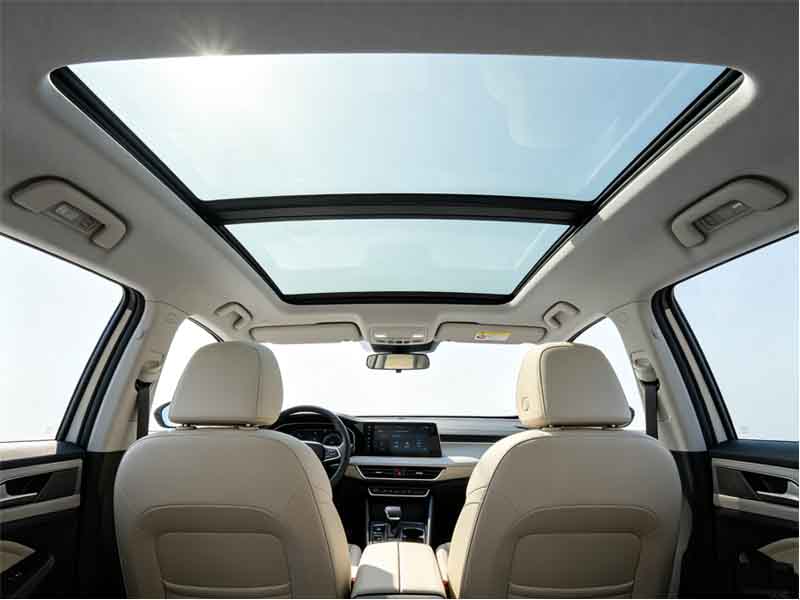
For example, for luxury brands, provide an exclusive sunroof design with a brand logo; For off-road vehicles, provide sunroof solutions with stronger impact resistance; For new energy vehicles, the aerodynamic design of the sunroof is optimized to reduce wind resistance and energy consumption.
Customization of technical parameters is also an important direction. The manufacturer will allow customers to adjust the technical parameters such as the size, material, and opening and closing mode of the sunroof according to their own needs.
For example, some customers may need a larger panoramic sunroof, while others pay more attention to the sound insulation performance of the sunroof. Customized services can ensure that every customer can get the products that best suit their own needs.
In addition to the product itself, customized services also extend to the after-sales support level. Automobile sunroof manufacturers will provide customers with exclusive technical training, maintenance programs, and quick response services to ensure that customers get all-round support during use.
This kind of deeply customized service can not only improve customer satisfaction, but also establish a long-term and stable cooperative relationship, which will bring higher customer loyalty and repurchase rate to sunroof manufacturers.
Trend 2: Lightweight materials redefine sunroof performance
Under the global wave of automobile electrification, the lightweighting of automobile bodies has become an irreversible industry trend. As an important part of the automobile body, the automobile sunroof can’t stay out of it.
In 2026, the application of lightweight materials will penetrate from high-end models to all categories, completely changing the performance and cost structure of sunroofs.
Traditional sunroof glass mostly uses ordinary tempered glass, which is heavy and has a significant impact on the energy consumption of the car body. The new generation of sunroof manufacturers is turning to new materials such as composite carbon fiber glass and ultra-thin chemically toughened glass, which can reduce the weight by 30%-40% while maintaining high strength.
For new energy vehicles, the cruising range can be increased by about 10% for every 100 kg weight reduction, and the value brought by a lightweight sunroof is self-evident.
In addition to the innovation of the glass itself, the sunroof frame materials are also being upgraded simultaneously. Light metal materials such as aluminum alloy and magnesium alloy are gradually replacing traditional steel, which not only further reduces the overall weight but also improves the corrosion resistance and durability of the frame.
Some leading manufacturers have even begun to adopt carbon fiber composite frames, which will make the sunroof lighter and give it stronger impact resistance.
The popularity of lightweight materials has also promoted the innovation of sunroof design. Thinner glass and frames allow designers to create a larger panoramic sunroof, enhancing the sense of space and visual experience inside the car.
At the same time, the installation convenience brought by light weight also reduces the assembly cost of the automobile factory and shortens the production cycle. For sunroof buyers, choosing sunroof suppliers with lightweight materials can not only enhance the market competitiveness of their products but also achieve cost optimization in long-term cooperation.
Trend 3: Intelligent interactive upgrade of automobile sunroof to create a third space experience
With the transformation of cars from means of transportation to mobile living spaces, sunroofs are no longer just a tool for lighting and ventilation, but are gradually becoming an important part of the intelligent cockpit.
In 2026, intelligent interaction will become the core competitive field of sunroof manufacturers, providing differentiated product solutions for B2B customers.
Voice control is the basic function upgrade of the intelligent sunroof. Users can complete the operation of opening and closing the sunroof, lifting the sunshade, and so on by simple voice command.
The more advanced system can also automatically adjust the sunroof state according to the ambient light, the temperature inside the car, and other data, thus realizing a truly intelligent experience.
For example, when it is detected that the temperature inside the car is too high, the system will automatically open the sunroof for ventilation and, at the same time, adjust the light transmittance of the sunshade to maintain a comfortable environment inside the car.
Gesture control is another breakthrough in intelligent sunroofs. Through the built-in sensor, the system can recognize the user’s gestures and realize a more intuitive operation experience. For example, the user can control the opening and closing degree of the sunroof simply by waving under it, without touching any physical buttons.
This interactive mode not only improves the convenience of operation, but also increases the sense of technology and luxury, especially suitable for the high-end vehicle market.
What is more noteworthy is that the smart sunroof is deeply integrated with the automatic driving system. In automatic driving mode, the sunroof can automatically adjust its state according to the driving scene.
For example, when cruising at high speed, the sunroof will automatically close and adjust the sunshade to reduce wind resistance and noise; When parking for a rest, the sunroof will automatically open, providing a wide field of vision and fresh air for the people in the car.
This intelligent interaction of scenes will redefine the value of automobile sunroofs and create brand-new product selling points for B2B customers.
Trend 4: Sustainable development strategy of the automobile sunroof industry, building a green supply chain.
The promotion of global environmental awareness is driving the transformation of the automobile industry to sustainable development.
In 2026, sustainable development will become the core strategy of sunroof manufacturers, from material selection to production technology, from supply chain management to product recycling, to build a green ecosystem in all directions.
On the material level, more and more manufacturers began to adopt environmentally friendly materials. For example, using recyclable glass instead of traditional glass and using water-based coatings instead of solvent-based coatings can reduce the emission of harmful substances in the production process.
Some leading enterprises have even begun to develop bio-based materials, such as sunroof frames made of plant fibers, to further reduce the impact on the environment.
For B2B customers, choosing a sunroof supplier with a sustainable development strategy can not only meet their own environmental protection requirements but also enhance the market recognition of products.
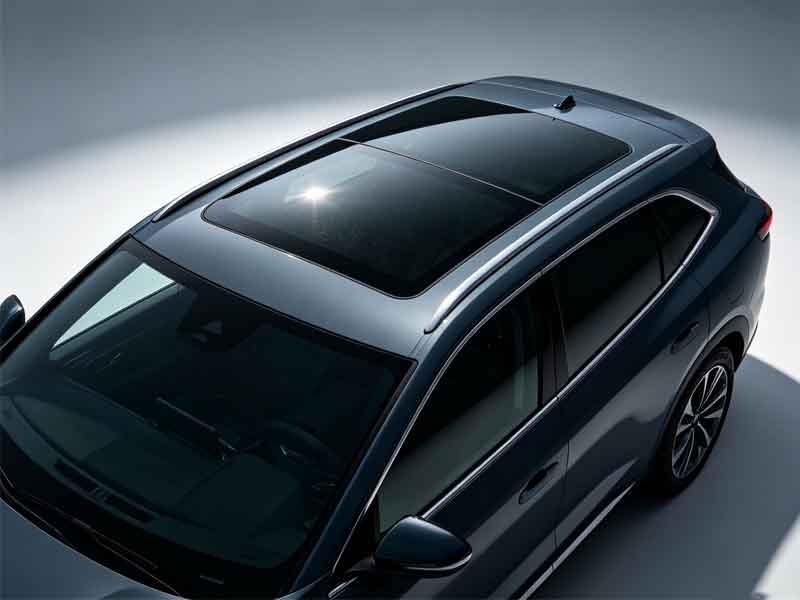
With the increasing demand of global consumers for environmentally friendly products, a green supply chain will become an important bargaining chip for enterprises to compete. In addition, environmentally friendly products often have longer service lives and lower maintenance costs, which can create long-term value for customers.
Trend 5: Upgrade the safety compliance of the automobile sunroof industry and build a guarantee system.
With the change of automobile sunroof from “optional configuration” to “standard requirement”, its safety performance has received unprecedented attention. In 2026, safety compliance will become the core competitiveness of sunroof manufacturers, from design and development to manufacturing, from installation and use to after-sales maintenance, and build a life-cycle safety guarantee system.
At the design level, automobile sunroof manufacturers are changing from passive protection to active safety. Traditional sunroof design mainly focuses on impact resistance, while the new generation sunroof integrates more active safety functions.
For example, a sunroof equipped with an anti-pinch sensor will immediately stop closing when a foreign object is detected to avoid pinching passengers; sunroofs with an emergency escape function can be quickly opened by special devices in case of accidents, providing escape routes for people in the car.
Some high-end products can even be linked with the vehicle safety system, automatically opening the sunroof when a collision occurs, and providing more comprehensive protection with airbags.
The safety and compliance of manufacturing links are also constantly strengthened. For example, by simulating the rain test under extreme weather conditions, the watertightness of the sunroof is detected;
The durability of the sunroof is verified by repeated opening and closing tests; Through the electromagnetic compatibility test, ensure the compatibility of the sunroof electronic system with other systems of the whole vehicle.
For customers who purchase an automobile sunroof, choosing a sunroof supplier with a perfect safety and compliance system can not only meet the regulatory requirements but also enhance the market competitiveness of products.
With the increasing attention of consumers to automobile safety performance, safety configuration has become an important factor in car purchase decisions.
In addition, a strict safety compliance system can effectively reduce the risk of product recall and reduce the economic losses and brand image damage of enterprises.
FAQ
Q: What are the main safety functions of an automobile sunroof?
A: Common safety functions include anti-pinch protection, which will immediately stop when foreign objects are detected during closing. Some sunroofs have an emergency escape function, which can be quickly opened as an escape passage in case of an accident.
Q: What safety and compliance tests will be done in the production process of automobile sunroof?
A: The routine inspection includes a rain test to simulate extreme weather, to test the water tightness of the sunroof and avoid water leakage; Through tens of thousands of repeated opening and closing tests, the durability of sunroof is verified to ensure long-term use stability; There is also an electromagnetic compatibility test to ensure that the sunroof electronic system will not interfere with the normal work of other electronic devices in the vehicle.
Q: Why do vehicle manufacturers choose sunroof suppliers with perfect safety and compliance systems?
A: sunroofs with perfect safety configuration can enhance the market competitiveness of vehicle products and meet the current consumer demand for automobile safety.