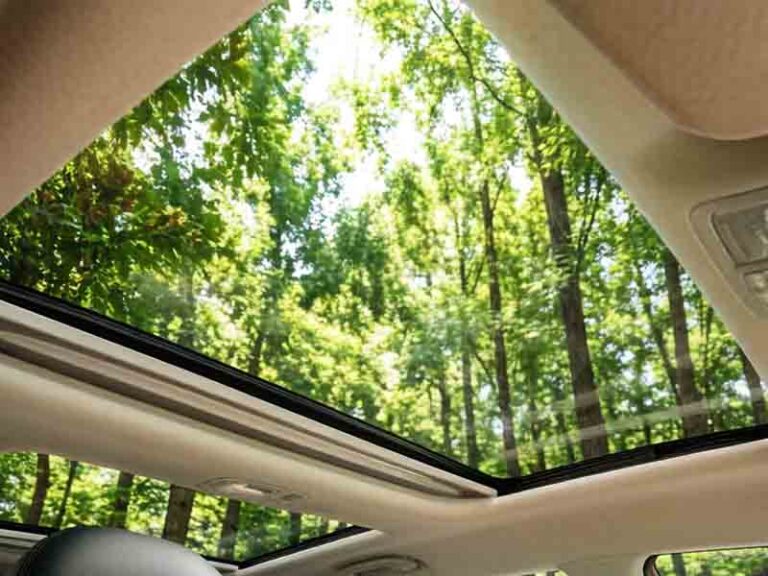
Auto Sunroof Glass Cracks: Reasons & How to Prevent Them
As a representative of automobile comfort configuration, an electric sunroof can let drivers and passengers enjoy natural wind and broaden their horizons at any time, but many car owners have encountered the problem of sunroof glass cracking. Different from body metal parts, once the glass is cracked, it can hardly be repaired and can only be replaced, which will not only generate a lot of maintenance costs, but also pose a potential safety hazard of falling off and fragmentation, threatening the driving safety of drivers and passengers at any time.
Sudden Temperature Difference: the invisible fuse of glass cracking
Park the car outdoors in winter and turn on the warm air immediately after getting on the bus. It didn’t take long for the sunroof glass to have fine cracks. Pouring a glass with cold water after exposure in summer will also cause cracking. This is because although the automobile sunroof glass has been tempered, it still cannot resist the drastic temperature change.
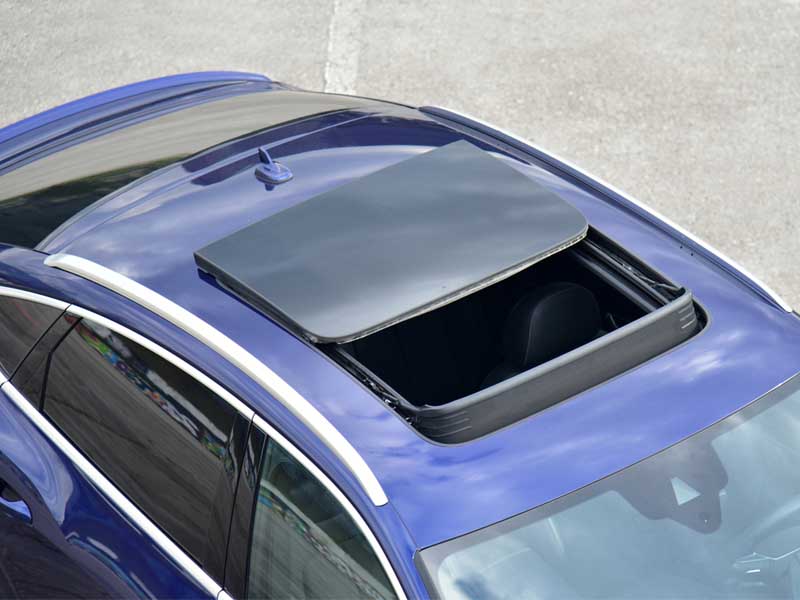
There is a stress balance in tempered glass. When the temperature changes sharply, the expansion and contraction speeds of the glass surface and the inside are inconsistent, which will break this balance and produce huge internal stress.
When the stress exceeds the bearing limit of glass, cracks or even whole pieces will appear. Especially in winter, the outdoor temperature is MINUS ten degrees, the warm air in the car is above 30℃, and the temperature difference between the inside and outside of the glass can reach 40℃. This extreme situation is the most likely to cause cracking.
In addition to human operation, sudden weather change is also one of the incentives. For example, in the spring and autumn, the strong cold air raid is still warm as spring during the day, and the temperature drops by more than ten degrees at night, so the sunroof glass parked outdoors may quietly crack at night.
External Force Impact: the accumulation of damage invisible to the naked eye
The crack of sunroof glass is not necessarily “sudden”, but is often the result of long-term external force accumulation. In daily driving, vehicles will be subjected to various small impacts: the splash of gravel when driving at high speed, the falling branches and fruits above the parking lot, and even the close impact of high-pressure water guns when washing cars, all of which may leave tiny dents or cracks on the glass surface.
These minor damages are difficult to detect at the initial stage, but they will become stress concentration points. With the bump and vibration of the vehicle and the repeated stress caused by temperature change, the small cracks will gradually extend and expand, eventually leading to the cracking of the whole glass. Especially when walking on a bad road, the violent bump of the vehicle will put extra stress on the glass and accelerate the crack propagation.
Another external force that is easily overlooked is the deformation of the sunroof frame. If the vehicle has collided or the vehicle body is slightly deformed due to long-term heavy load, the force on the sunroof frame will become uneven, which will continue to squeeze the glass and lead to cracking for a long time.
Material Aging: failure of sealing strip
The sunroof glass does not exist in isolation, and it is connected with the car body through sealing strips. The rubber strip not only plays the role of waterproof and sound insulation, but also buffers the vibration of the glass.
However, with the increase of use time, the adhesive tape will gradually age and harden and lose its elasticity.
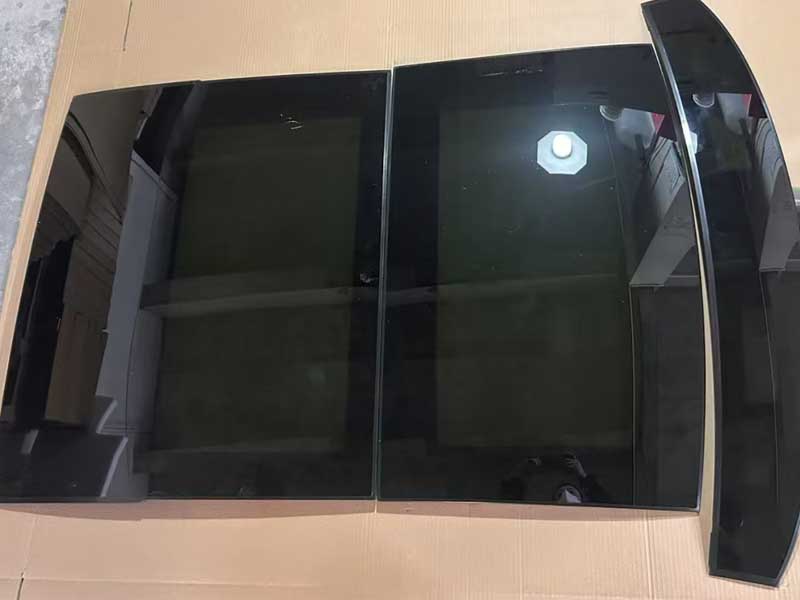
When the sealing strip is aged, it can’t effectively buffer the vibration of the vehicle, and the glass will directly bear more impact force. At the same time, the aging rubber strip may crack and shrink, which will enlarge the gap between the glass and the frame, and rain and dust will easily enter and corrode the sealing layer at the edge of the glass.
When the edge of glass is corroded for a long time, its strength will be greatly reduced, and it is more prone to cracking.
In addition, inferior sealing tape may release harmful substances and accelerate the aging of glass. Some low-priced cars or modified sunroofs use poor rubber strips, which will obviously age in three to five years and become a hidden danger of sunroof glass cracking.
Daily Maintenance: four habits to prolong the life of the sunroof lock response
Knowing the causes of sunroof glass cracking, targeted prevention becomes simple. As long as you develop the following four habits, you can greatly reduce the probability of sunroof glass cracking:
First, avoid sudden changes in temperature difference. After getting on the bus in winter, turn on the cold air to demist, and then turn on the warm air after the glass temperature rises slowly; Don’t pour the glass with cold water immediately after the summer sun exposure. You can open the car door to cool down, or clean it with warm water. Try to choose a cool place when parking to avoid long exposure or cold.
Second, check the glass condition regularly. Pay attention to observe whether there are tiny cracks or dents on the sunroof glass surface every time you wash the car, and repair them in time once found. After taking a bad road or passing through a construction site, it is necessary to check carefully to avoid hidden dangers left by gravel.
Third, curing the sealing strip. Wipe the sealing rubber strip with special rubber strip curing agent every three months to keep its elasticity. If the rubber strip is found to be cracked and hardened, replace it in time.
At the same time, pay attention to clean up the dust and sundries in the sunroof track to avoid uneven stress on the glass caused by track sticking.
Fourth, avoid violent operations. Open and close the sunroof smoothly, and don’t use force when the sunroof is fully opened or closed. When the sunroof is stuck, don’t push it hard, but check the track for foreign objects or deformation in time.
FAQ
Q: Why does the sunroof leak?
A: The leaking sunroof in Otawa is related to the aging of the sealing rubber strip and the blockage of the track. After the rubber strip loses its elasticity, it can’t fit. The sediment and sundries accumulated on the track hinder the drainage, so rain water can easily penetrate into the car. Daily rubber strip maintenance and track cleaning can largely avoid this problem.
Q: Is there a small crack in the sunroof that must be repaired?
A: If the tiny cracks in the sunroof glass are not treated in time, the cracks will gradually expand as the vehicle bumps and the temperature changes, which will not only affect the strength of the glass, but also bring potential safety hazards. It is recommended to repair them as soon as possible after discovery.
Q: Do you need any maintenance if you don’t use the sunroof for a long time?
A: Even if the sunroof is not often used, it is recommended to open and close it at least once a month to let the sunroof move several times. At the same time, check the running state of the sunroof to avoid the adhesion of the rubber strip in a static state for a long time, and also timely check the problem of track sticking.